
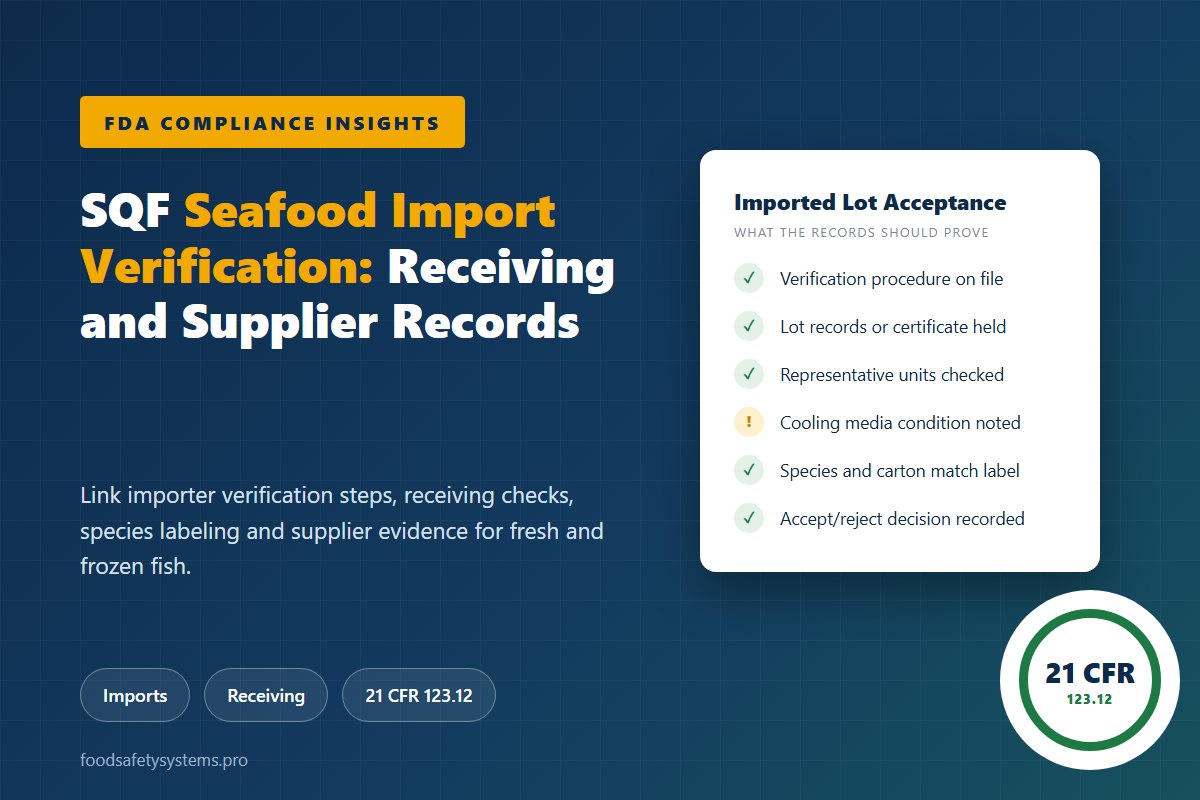
Seafood import verification links what a foreign supplier promises to what actually arrives at your dock: product-specific hazards, receiving checks, supplier records, label control and documented corrective actions. Fresh tuna and salmon, for example, can present very different hazards and handling risks, especially when they are intended for raw consumption. An SQF food safety system should make those differences visible in specifications, receiving criteria and supplier approval evidence.
Quick answer: an SQF-certified operation should assess receiving, labeling and supplier issues through its own SQF scope and its regulatory obligations. U.S. importers of fish and fishery products must also meet the importer verification requirements in 21 CFR 123.12. An FDA seafood HACCP finding is not itself an SQF certification finding, and SQF certification does not replace Part 123.
Who this guidance is for
Seafood importers, processors and distributors that receive fresh or frozen fish under an SQF food safety system, plus their SQF practitioners, receiving supervisors and internal auditors.
Review seafood hazard analysis and product specifications
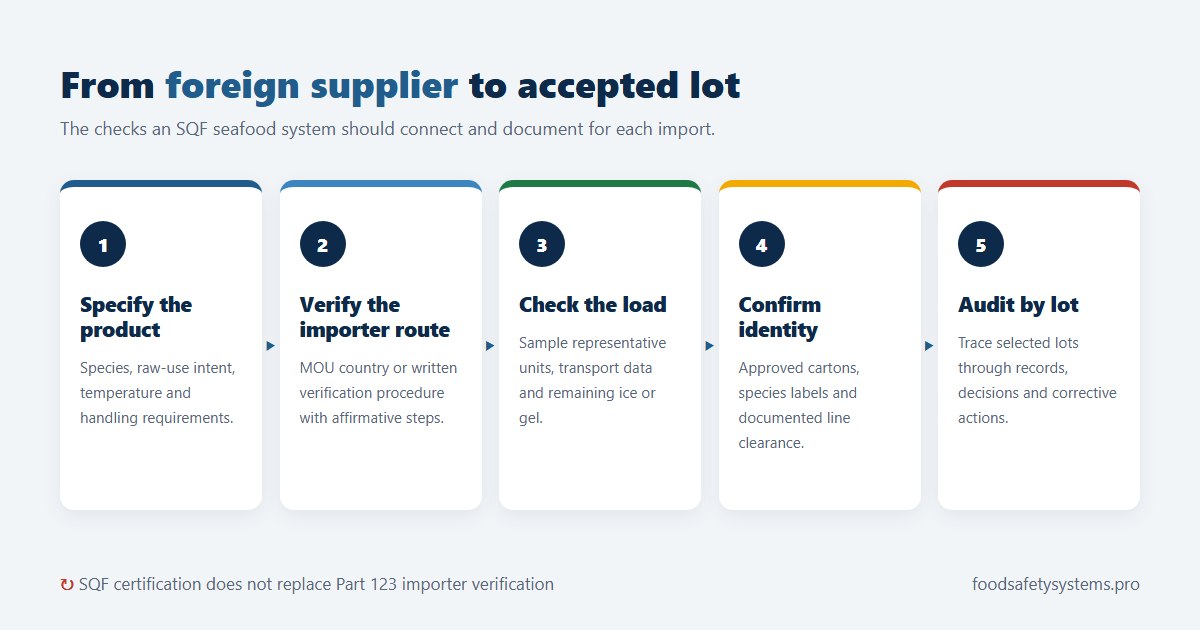
Start with the product, not the paperwork. Differentiate tuna histamine risks, pathogen risks, intended raw use and fish allergen identification. Then maintain specifications that cover species, temperature controls and handling conditions. Our seafood HACCP histamine control guide explains the species-specific hazards in more depth.
Understand seafood import verification requirements
Under 21 CFR 123.12, an importer of fish or fishery products has two routes. It can obtain the product from a country with an active FDA memorandum of understanding, or similar agreement, that covers the product. Otherwise, it must have and implement written verification procedures that list, at a minimum:
- Product specifications designed to ensure the product is not adulterated.
- Affirmative steps, such as lot-specific HACCP and sanitation monitoring records from the foreign processor.
- Alternatively, a continuing or lot-by-lot certificate from a foreign government authority or competent third party.
- Other options: regular inspection of the foreign processor, an English copy of its HACCP plan with a written guarantee, or periodic testing with a written guarantee.
In addition, the importer must keep English-language records showing that the affirmative steps were performed and what they found. An SQF supplier approval program can hold this evidence, but it must still meet the regulatory requirement on its own terms.
Strengthen receiving and cold-chain checks
Set scientifically supported acceptance criteria for both product and transport conditions. Next, sample representative product units rather than only the top of the load. Where product ships with ice or gel packs, examine the remaining frozen cooling media and retain the incoming observations. Our sibling guide on seafood cold storage controls covers what happens after the load is accepted.
Prevent species and carton mix-ups
Fish is a major food allergen in the United States, and the species must be declared on the label. Therefore, use controlled product identification, approved labels and packaging, and documented line clearance. Together, these steps reduce the risk of an undeclared fish allergen or a mislabeled product.
Assess supplier approval evidence
Verify each supplier’s approved status, food safety information and traceability for every seafood product. Moreover, define additional controls for imported products where regulations require them. Our article on SQF supplier approval for imported ingredients shows how to organize this documentation.
Verify records and corrective actions
Compare actual receiving, label and process monitoring records with site procedures. When deviations recur, identify the root cause and schedule effectiveness checks. In short, a repeated deviation is a sign that the first fix did not work.
Use internal audits to identify gaps
Select specific lots and trace them back through the HACCP plan, SQF procedures, receiving criteria, import verification records and corrective action decisions. This lot-based approach often reveals gaps that a document-only review misses. See our internal audit program page for how to structure these checks.
Seafood import verification checklist
- Verify the seafood HACCP and importer requirements that apply to each product and activity.
- Confirm that hazard analyses address species-specific pathogen, histamine and allergen risks.
- Check receiving temperatures, transport evidence and monitoring forms against procedures.
- Validate product identification, approved cartons and species-specific labeling.
- Record deviations, product disposition and corrective-action effectiveness.
- Maintain current supplier, import verification and traceability evidence where applicable.
Frequently asked questions
Is SQF certification the same as seafood HACCP compliance?
No. SQF is a food safety certification framework. Applicable FDA seafood HACCP and importer obligations under 21 CFR Part 123 must be assessed separately.
Why does fish species verification matter?
Incorrect species information or packaging can create labeling and allergen risks. It can also undermine traceability.
What records help demonstrate receiving control?
Product temperatures, shipping conditions, cooling media observations where relevant, supplier details, acceptance decisions and exception records.
How Consultare Inc. Group can help
Consultare Inc. Group provides professional food safety and regulatory compliance support for seafood businesses. Services and deliverables depend on the product, applicable rules and agreed engagement scope.
- SQF gap assessments and internal audits: lot-based receiving and records review.
- Supplier verification support: seafood supplier approval reviews.
- FDA compliance integration: align SQF procedures with Part 123 importer duties.
- Corrective action support: CAPA planning for recurring receiving deviations.
Need help managing your SQF responsibilities?
Discuss your products, documentation and compliance priorities with the Consultare team in a free consultation, or contact our team.
Start building your compliance system
Prefer to organize your compliance activities yourself? Create a free SystemsBuilder account to manage specifications, controlled documents, assigned actions and records in one structured workflow. Software supports record management; it does not by itself ensure compliance.
Technical sources: 21 CFR Part 123, 21 CFR 123.12, FDA food allergies and SQFI. Independent educational content: Consultare Inc. Group is not affiliated with or endorsed by FDA, SQFI or any companies referenced in the underlying regulatory materials. This article does not constitute regulatory approval, certification or legal advice; applicability must be assessed for each product, facility and operation.