
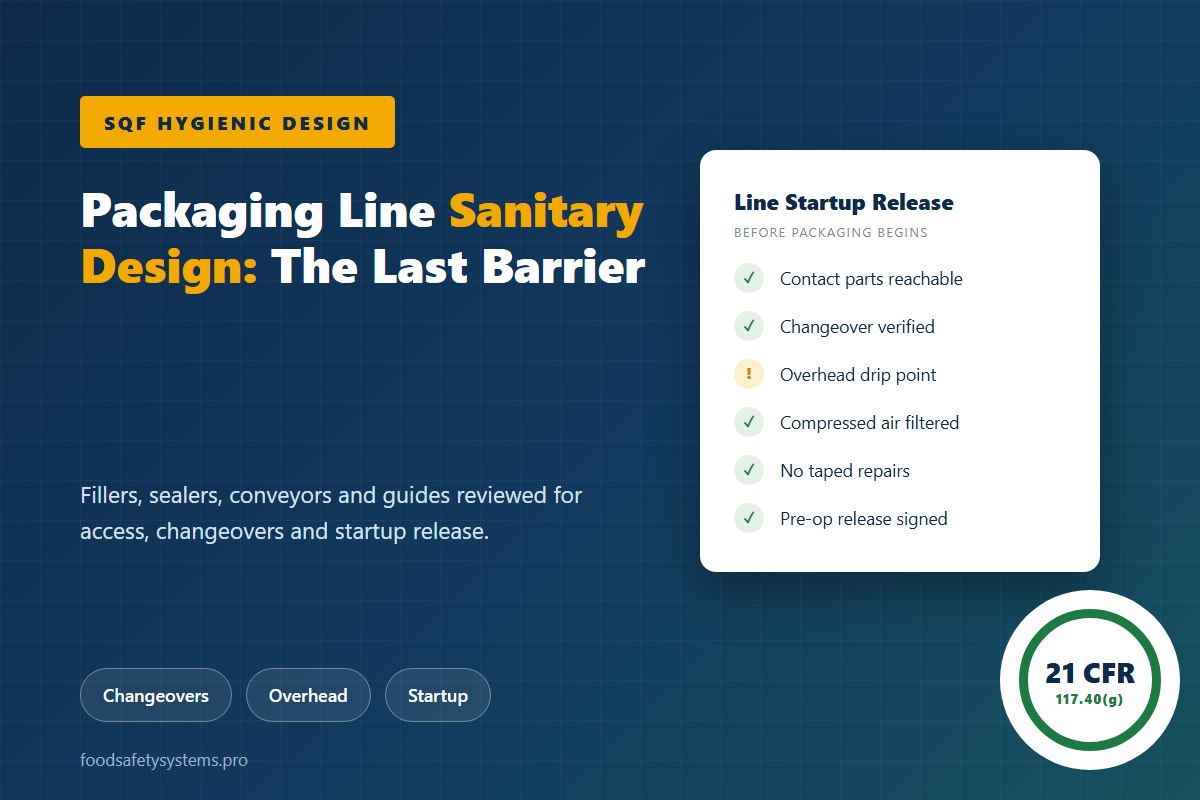
Packaging line sanitary design is often the last physical barrier before food is sealed and shipped. Packaging equipment can expose food to contamination through hard-to-clean fillers, sealers, conveyors or product-contact guides. Audit readiness therefore depends on both the condition of the equipment and the reliability of routine controls.
Quick answer: review line accessibility, food-contact materials, changeover cleaning, overhead exposure, compressed air or utilities used near product, maintenance repairs and release checks before startup. Then record findings and prioritize corrective actions. SQF certification and U.S. FDA current good manufacturing practice (cGMP) requirements are separate obligations to consider where they apply.
Who this guidance is for
This guide is for SQF packaging facility managers, QA teams, line leads and sanitation supervisors. It applies to primary packaging of exposed food, such as filling, portioning, wrapping and sealing operations.
Why packaging lines are a high-exposure area
Once product reaches the packaging line, there is usually no later step to remove contamination. Consequently, any residue, allergen carry-over or foreign material at this stage can reach the consumer.
Packaging lines are also complex. They combine moving belts, guides, hoppers, heated jaws, sensors and pneumatic parts in a small footprint. Many of these parts are hard to reach and are adjusted frequently during changeovers.
FDA cGMP rules give useful context. Compressed air or other gases used to clean food-contact surfaces or introduced into food must be treated so that food is not contaminated (21 CFR 117.40). In addition, plants must prevent drip or condensate from fixtures, ducts and pipes from contaminating food, food-contact surfaces or packaging materials (21 CFR 117.20).
What good packaging line sanitary design looks like
Each line is different. Even so, well-controlled packaging lines usually share these features:
- Fillers, hoppers and guides can be removed or reached for cleaning.
- Food-contact materials suit the product and cleaning chemicals.
- Conveyors and belts can be lifted, opened or cleaned underneath.
- No pipes, cable trays or condensing surfaces sit above exposed product.
- Compressed air near product is filtered and its quality is managed.
- Startup requires a documented pre-operational inspection and release.
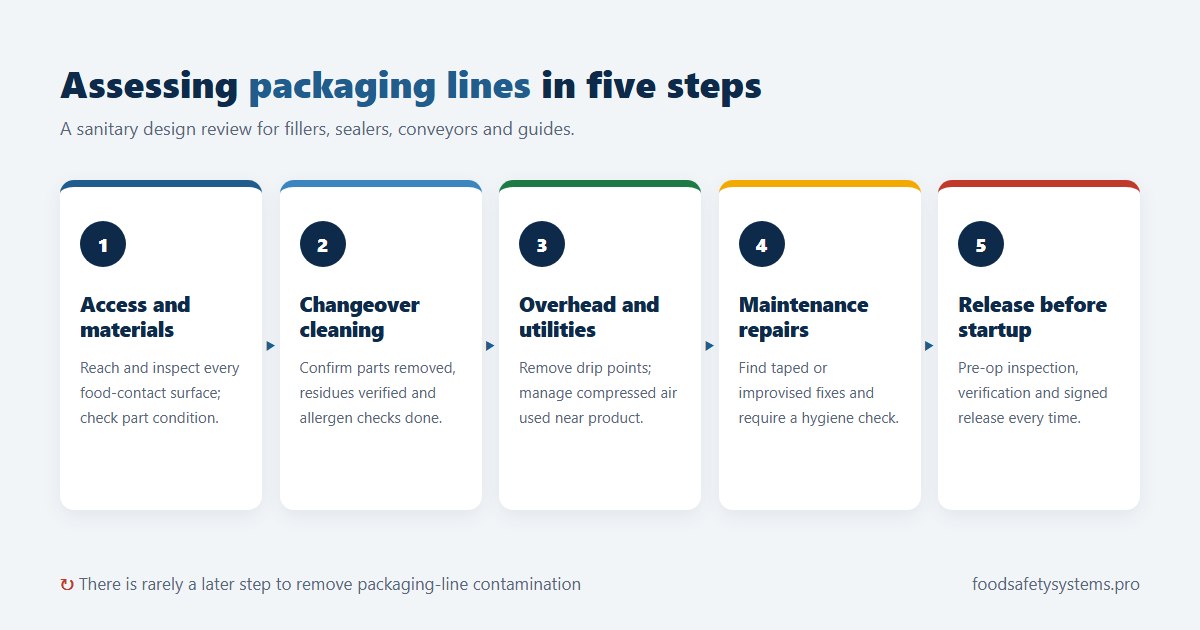
Five steps to assess packaging line sanitary design
1. Check accessibility and food-contact materials
Walk the line with sanitation and maintenance staff. Identify surfaces that cannot be reached or seen during cleaning. Then confirm that food-contact parts are made of suitable, intact materials.
2. Review changeover cleaning
Examine how the line is cleaned between products, especially allergen changeovers. Check which parts are removed, how residues are verified and how long the process really takes.
3. Control overhead exposure and utilities
Look above the line for condensation, dust, flaking paint and unprotected lighting. Also review compressed air, water or other utilities used near product, including filtration and maintenance records.
4. Review maintenance repairs
Check for temporary fixes, such as tape, cable ties or improvised guides, in product zones. Confirm that work on the line ends with a clean-up and hygiene check before restart.
5. Verify release before startup
Require a pre-operational inspection, verification suited to the risk and a signed release before production begins. Keep the results so trends can be reviewed over time.
Common problems on packaging lines
- Residue under conveyor belts and inside guide rails.
- Filler nozzles or hoppers that are not fully dismantled at changeover.
- Condensation dripping from overhead pipes onto open product.
- Compressed air used for blow-off without managed filtration.
- Taped repairs on product-contact guides.
- Lines started before the pre-operational check is signed.
Records and evidence to keep
Packaging line sanitary design reviews are most useful when the evidence links findings to action. Keep:
- Line assessment findings with photos, locations and risk ratings.
- Changeover cleaning procedures and allergen verification results.
- Pre-operational inspection and startup release records.
- Compressed air filter maintenance and any testing the site performs.
- Maintenance work orders with hygiene checkpoints.
- Corrective actions with owners, deadlines and closure evidence.
Sites that manufacture packaging materials, rather than pack food, are covered by separate SQF requirements. See our food packaging manufacturing page for that scope. For allergen changeovers, our allergen control measures page offers practical controls.
Example scenario: a snack bagging line
In this illustrative example, a snack plant receives a customer complaint about a small piece of blue plastic in a bag. Investigation traces it to a worn guide rail on the bagger. Someone had taped the rail weeks earlier.
A packaging line sanitary design review then finds two more taped repairs and a filler funnel that is hard to remove at changeover. As a result, the team replaces the guide rails, adds a temporary repair log and updates the changeover procedure.
They also add a hygiene release after any line maintenance. Subsequent inspections show no further taped repairs in product zones, and the corrective action is closed with evidence.
Packaging line sanitary design checklist
- Confirm all food-contact surfaces can be reached and inspected.
- Check food-contact materials for suitability and damage.
- Review changeover cleaning and allergen verification.
- Remove overhead drip and condensation risks.
- Manage compressed air and utilities used near product.
- Control temporary repairs in product zones.
- Require a documented release before startup.
- Track corrective actions to verified closure.
Frequently asked questions
What parts of a packaging line need the closest review?
Focus on surfaces that touch exposed product, such as fillers, hoppers, guides, belts and sealing jaws. Then review what sits above and around them.
How often should packaging line sanitary design be reviewed?
Review lines when they are installed or modified, when products change, and when sanitation or foreign material findings recur. Internal audits can also include periodic checks.
Does a clean pre-op inspection prove the design is hygienic?
Not always. A line can pass visual checks while residue hides in areas nobody inspects. Verification and trend review help reveal those gaps.
How Consultare Inc. Group can help
Consultare Inc. Group can assist SQF teams with packaging line gap assessments, sanitation documentation reviews and practical corrective action plans. Exact deliverables depend on the approved scope. Facility management retains responsibility for approving and implementing changes, and we do not promise certification, regulatory approval or a particular audit outcome.
- SQF gap assessments and internal audits: packaging line and sanitation review.
- Corrective action support: root cause analysis for foreign material and residue findings.
- Document control services: changeover and pre-op procedures.
- Audit readiness coaching: organize packaging line evidence before the audit.
Need help managing your SQF responsibilities?
Discuss your products, documentation and compliance priorities with the Consultare team in a free consultation, or contact our team.
Start building your compliance system
Prefer to organize your compliance activities yourself? Create a free SystemsBuilder account to manage specifications, controlled documents, assigned actions and records in one structured workflow. Software supports record management; it does not by itself ensure compliance.
Technical sources: 21 CFR 117.40, 21 CFR 117.20 and SQFI. Independent educational content: Consultare Inc. Group is not affiliated with or endorsed by SQFI or FDA. This article is not legal advice, regulatory approval, certification or a guarantee of compliance; requirements depend on the facility, food, jurisdiction and applicable program, so confirm current requirements and obtain qualified technical review before implementation.