
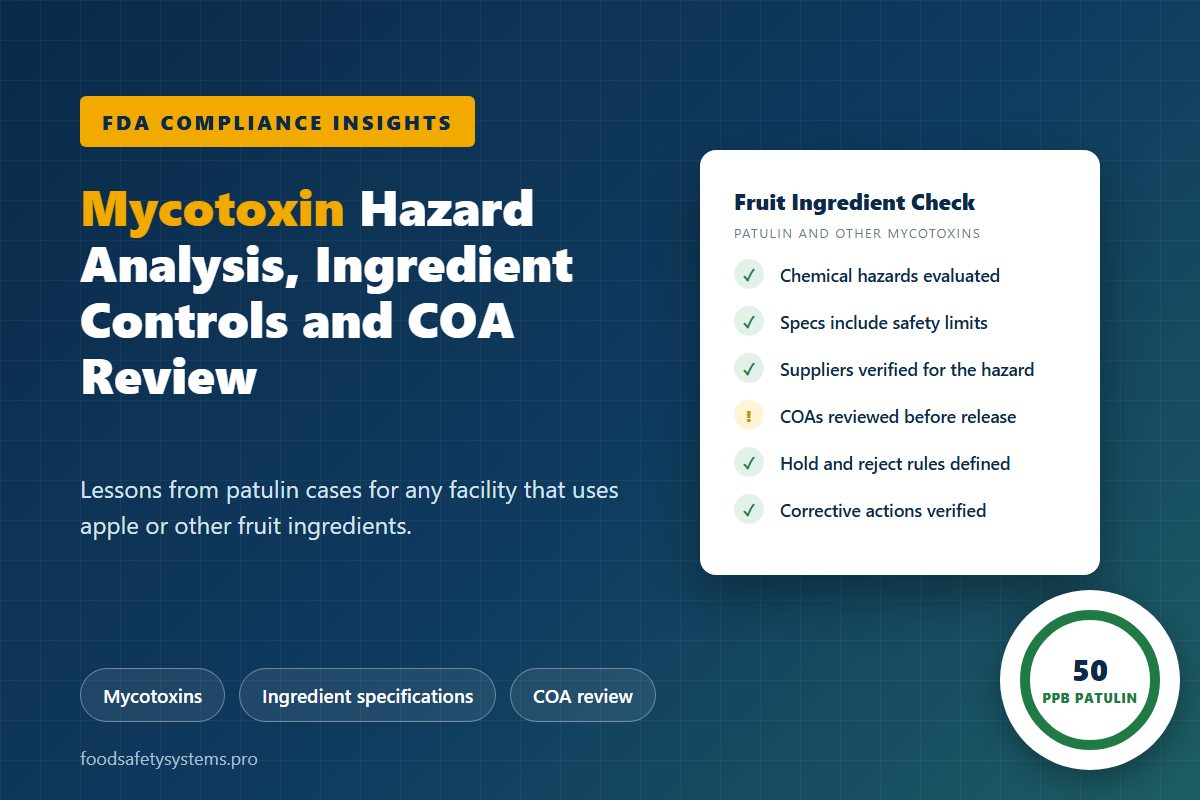
Mycotoxin hazard analysis matters for any facility that uses fruit ingredients, because these chemical hazards cannot be seen at receiving and are not destroyed by normal processing. Mycotoxins such as patulin are associated with certain fruits, especially apples affected by mold, and should be evaluated wherever they are relevant to the ingredient, process and finished product. An effective SQF system connects hazard analysis with supplier approval, ingredient specifications, verification of incoming materials, production controls and documented corrective actions.
FDA warning letters involving patulin describe a recognizable pattern: the hazard was left out of the hazard analysis, specifications did not set a limit, and COAs were filed without anyone comparing them to a specification. Here is how to make each step a real control.
Evaluate chemical hazards in fruit ingredients
Review each ingredient’s origin, processing, intended use and reasonably foreseeable contamination. For apple ingredients and other relevant fruit materials, decide whether patulin or other mycotoxins need to be addressed in the hazard analysis. FDA’s compliance policy guide CPG Sec. 510.150 sets an action level of 50 micrograms per kilogram (50 ppb) of patulin in apple juice, apple juice concentrates and apple juice products.
Establish meaningful ingredient specifications
Specifications should name the relevant safety criteria, acceptance limits where they are scientifically and legally supported, testing expectations and the action to take when a requirement is not met. A generic specification may not address a known ingredient-specific hazard. Our guide to supplier specification verification explains what auditors look for.
Strengthen supplier approval and verification
Evaluate whether each supplier has suitable controls for the identified hazard, such as fruit sorting and culling of moldy fruit. Decide what evidence you need, how it will be reviewed, and how supplier performance and changes are monitored through your approved supplier program.
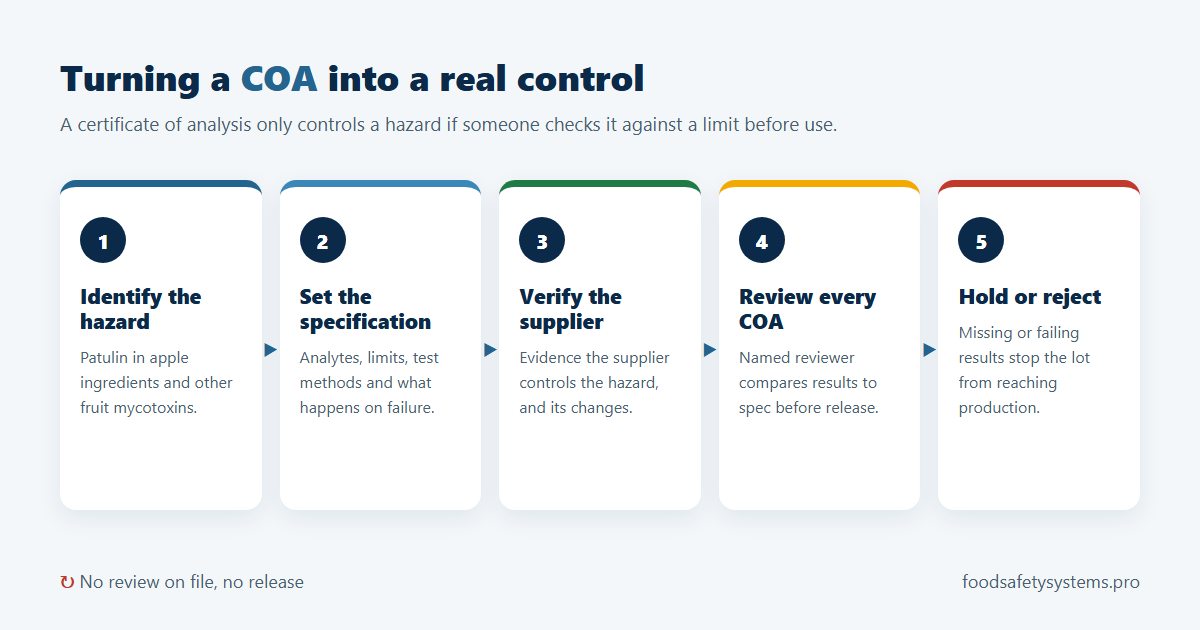
Make COA review part of mycotoxin hazard analysis controls
Define who reviews each applicable COA, which analytes and limits they check, how results are compared with specifications, and what happens when a result is missing, unacceptable or unclear. Keep evidence of the review before the ingredient is released or used. Our COA and certification verification guide covers this in more depth.
Control receiving, release and production use
Set documented criteria to hold or reject ingredients when required information is missing or results fail acceptance criteria. Make sure purchasing, receiving, quality and production staff all follow the same release process, so a lot cannot reach the line before quality has signed off.
Investigate deficiencies and verify corrective actions
Document the product impact assessment, root cause, corrections, preventive measures, responsible people and effectiveness checks. Verify that revised specifications and supplier controls are followed consistently over time, following your CAPA process.
Mycotoxin hazard analysis checklist
- Does the hazard analysis address patulin and other relevant mycotoxins for each fruit ingredient?
- Do ingredient specifications include safety limits and test expectations?
- Do approved suppliers have controls for the hazard, and do you have evidence of them?
- Is every applicable COA reviewed against the specification by a named person before release?
- Are lots with missing or failing results held or rejected?
How Consultare Inc. Group can help
Consultare Inc. Group supports SQF gap assessments, hazard analysis and risk assessment review, ingredient and raw-material specification development, supplier approval and verification programs, COA review procedures, incoming-material controls, internal audit support and corrective action planning. Support can include a documented gap register, recommended actions, revised procedures or forms, and implementation guidance as agreed in the engagement.
Need help managing your SQF responsibilities?
Whether you are preparing for SQF certification, reviewing your ingredient hazard analysis, strengthening supplier controls or improving COA review and material release, you do not have to manage it alone. Book a free consultation to discuss your products, ingredients, food safety system and audit-readiness priorities, or contact our team.
Start building your compliance system
Prefer to organize your compliance activities yourself? Create a free SystemsBuilder account and begin building a structured system for your compliance documentation and processes. The right time to strengthen ingredient controls, supplier verification and documentation is before a compliance gap becomes a business problem.
Technical sources: FDA CPG Sec. 510.150 and 21 CFR Part 117. This article is educational; specific requirements depend on your products, ingredients, certification scope and applicable regulations.