
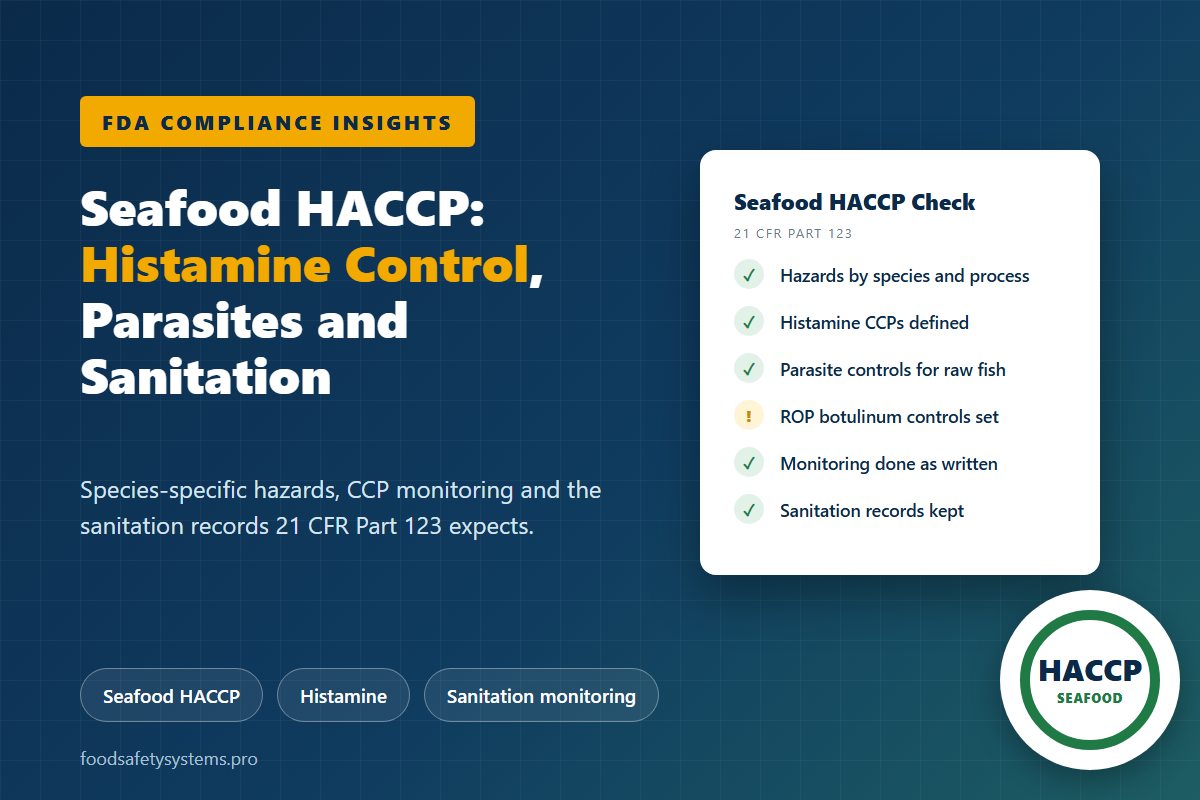
Seafood HACCP histamine control starts the moment a susceptible fish is caught, because histamine forms when fish warm up and is not destroyed by cooking, freezing or canning. Seafood processors face product-specific hazards that need an effective hazard analysis, suitable critical control points, reliable monitoring and documented corrective actions. Under FDA’s seafood HACCP regulation, 21 CFR Part 123, a HACCP plan must reflect the species, processing method, intended use and the hazards reasonably likely to occur. A written plan alone is not enough: the facility must carry out the controls and keep records that prove the system works.
FDA seafood warning letters repeatedly cite missing histamine controls, CCP monitoring that does not match the written plan, and incomplete sanitation monitoring records. The eight areas below address each one.
Build hazard analyses around seafood species and processes
Evaluate each kind of fish or fishery product and how it is processed. Consider histamine (scombrotoxin) formation in susceptible species such as tuna, mahi-mahi and mackerel, parasites in fish intended for raw consumption, pathogen growth and toxin formation, and hazards linked to reduced-oxygen packaging. FDA’s Fish and Fishery Products Hazards and Controls Guidance lists the hazards by species.
Establish effective seafood HACCP histamine control
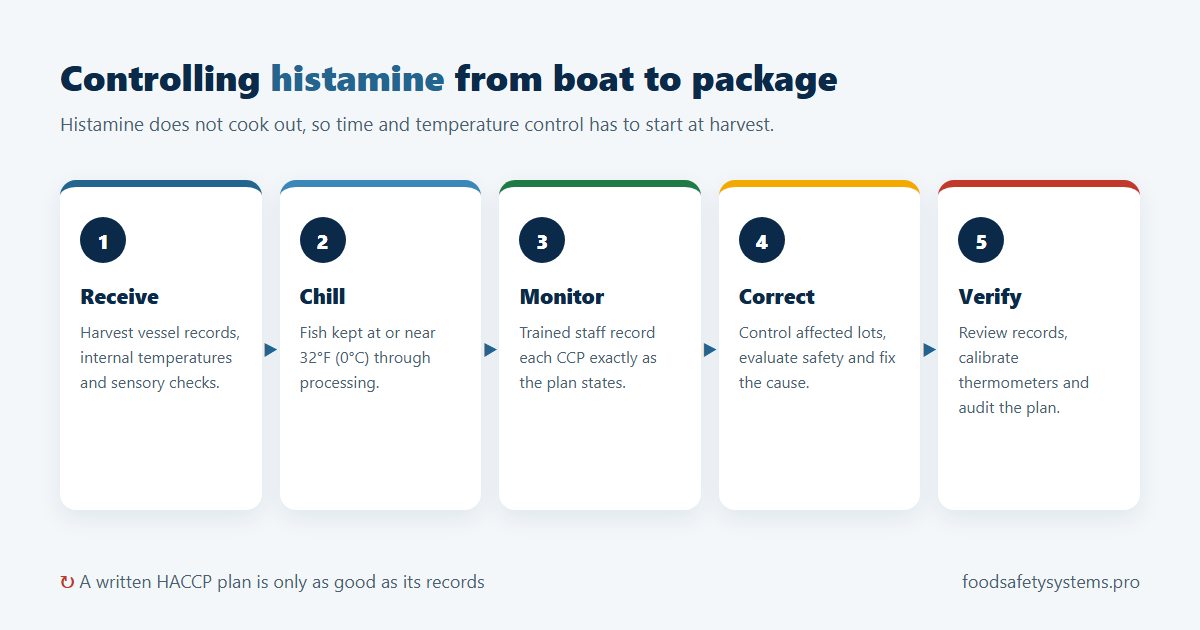
Identify histamine-forming species and assess receiving, handling, chilling, storage and cumulative time-temperature exposure. Set critical limits, monitoring methods, corrective actions and records based on the product and FDA guidance. Common controls at receiving include harvest vessel records, internal temperature checks, sensory examination and histamine testing where appropriate.
Address parasite hazards for fish intended to be eaten raw
Decide whether parasites are reasonably likely to occur based on species, source and intended use. Where they are, set and document a parasite destruction control, such as validated freezing, or another applicable measure.
Control botulinal hazards in reduced-oxygen packaged seafood
Evaluate vacuum-packed and smoked seafood for Clostridium botulinum growth and toxin formation. Set scientifically supported time-temperature, formulation (such as water-phase salt), packaging and storage controls appropriate to the product.
Implement CCP monitoring exactly as written
Assign trained staff, monitoring frequency, measurement methods, record requirements and supervisory review. Make sure what happens on the floor matches the written HACCP plan. If the plan says every lot is checked, every lot must be checked and recorded.
Strengthen sanitation monitoring
Set procedures to monitor sanitation conditions and practices under 21 CFR 123.11, which covers eight key areas: safety of water, condition and cleanliness of food-contact surfaces, prevention of cross-contamination, handwashing and toilet facilities, protection from adulterants, labeling and storage of toxic compounds, employee health and exclusion of pests. Keep sanitation monitoring records and correct deficiencies promptly. See our hygiene and sanitation programs guide.
Make corrective actions address product and cause
Identify and control affected product, evaluate its safety, correct the cause of the deviation and document what was done. Examples include equipment repair, employee retraining or supplier follow-up, as appropriate.
Verify implementation and maintain records
Review CCP monitoring, sanitation records, corrective actions, calibration and verification activities. Use internal audits and management review to spot recurring gaps.
How Consultare Inc. Group can help
Consultare Inc. Group supports seafood food safety system assessments, HACCP plan development and review, species-specific hazard analysis, CCP monitoring procedures, histamine and parasite hazard assessments, sanitation monitoring procedures, corrective action development, internal audits and implementation support. SQF certification readiness can also be assessed where the site’s products and activities fall within the applicable scope, including the SQF aquaculture and animal product manufacturing codes.
Need help managing your SQF responsibilities?
Whether you process fresh fish, raw seafood, smoked fish, shellfish or ready-to-eat seafood products, book a free consultation to discuss your seafood HACCP plans, critical limits, monitoring records, sanitation program and certification priorities. You can also contact our team.
Start building your compliance system
Prefer to organize your compliance activities yourself? Create a free SystemsBuilder account and begin building a structured system for your compliance documentation and processes.
Technical sources: 21 CFR Part 123 and FDA’s Fish and Fishery Products Hazards and Controls Guidance. This article is educational; specific requirements depend on your products, facility, certification scope and applicable regulations.