
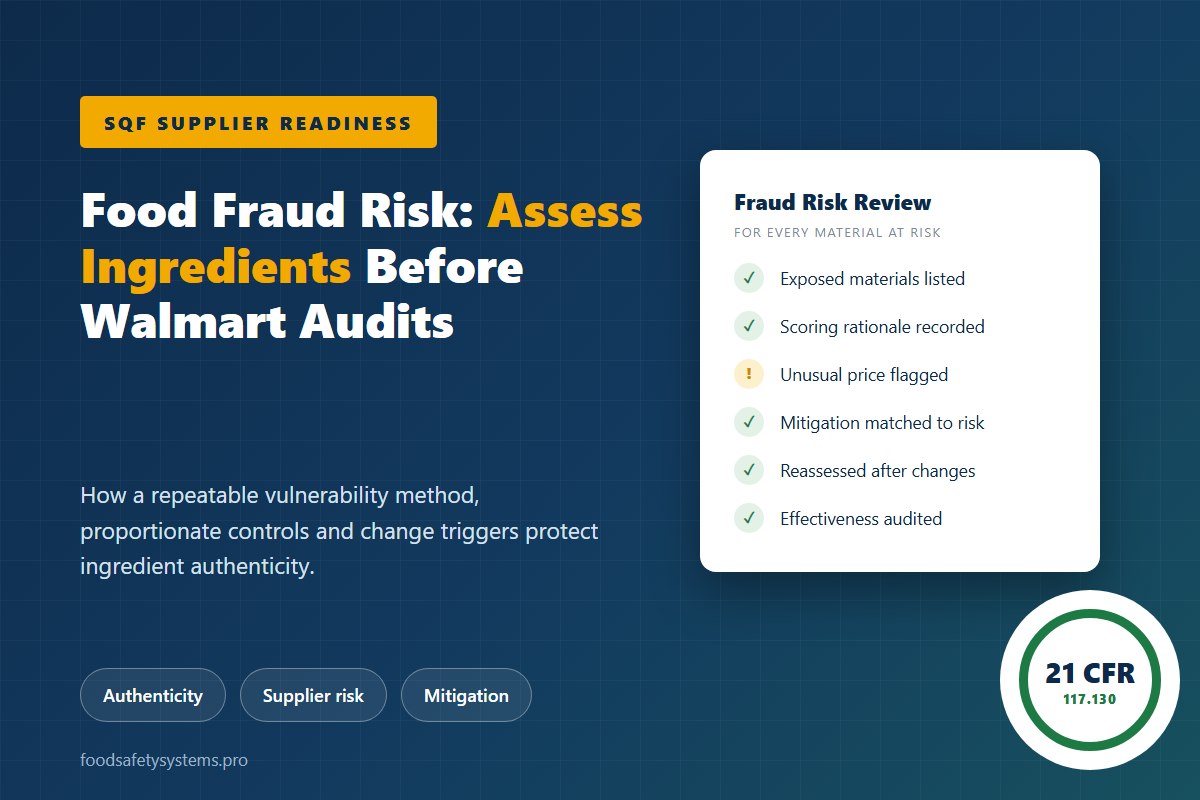
An SQF food fraud risk assessment for Walmart suppliers helps purchasing and quality teams ask the right questions before a cheaper ingredient turns into an authenticity problem. A lower price can look attractive at first. However, substitution, dilution or misrepresentation can affect quality, safety and brand confidence. A documented, risk-based vulnerability assessment shows how the site decided which materials need extra attention.
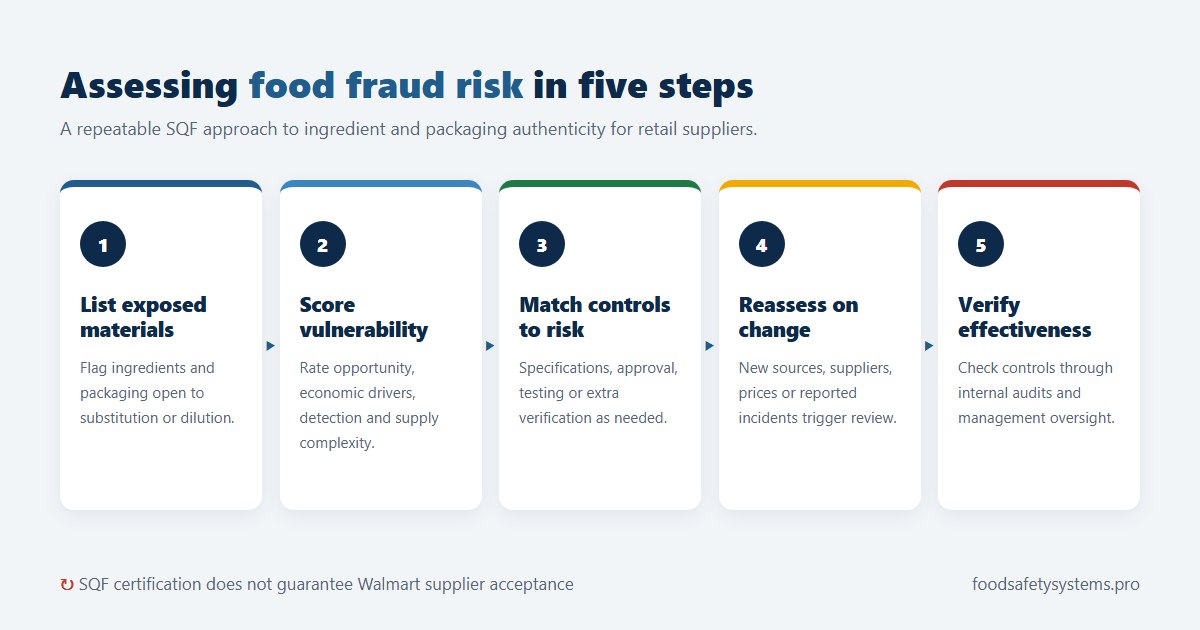
Quick answer: list the ingredients and packaging exposed to fraud, score them with a repeatable method, apply proportionate mitigation controls, reassess when sourcing or pricing changes, and review effectiveness through internal audits and management oversight. Requirements can differ by product, facility, commercial relationship and sales channel, so confirm current supplier expectations with the relevant Walmart contact before treating any practice as a mandatory Walmart rule.
Who this guidance is for
Food manufacturers and importers supplying or preparing to supply Walmart, SQF practitioners, purchasing managers and quality teams responsible for ingredient authenticity.
List the materials with potential fraud exposure
Start by identifying ingredients and packaging where substitution, dilution, counterfeiting or misrepresentation could arise. Then prioritize materials with complex sourcing, unusual pricing, a history of incidents or authenticity that is hard to verify. Our food fraud vulnerability assessment page explains the core assessment structure in more detail.
Use a repeatable vulnerability methodology
Evaluate each material against the same factors: opportunity, economic drivers, likelihood of detection, supply-chain complexity and supplier transparency. Record the sources and the rationale behind each rating. A color-coded matrix without documented judgment can be difficult to defend during an audit.
Select proportionate mitigation controls
Match controls to the level of risk. Options include purchasing oversight, tighter specifications, supplier approval, authenticity testing or additional verification. Not every ingredient needs the same testing protocol. Our guide to food fraud mitigation strategies covers practical control options.
Fraud also has a regulatory dimension. Under FDA’s preventive controls rule, a facility’s hazard analysis must consider hazards that may be intentionally introduced for economic gain (21 CFR 117.130), where the rule applies.
Respond to changes and incidents
Reassess vulnerability when sourcing locations, prices or suppliers change, or when fraud concerns are reported for a material. Document each investigation, the corrective actions taken and any changes to the mitigation plan. In addition, link the assessment to your SQF supplier approval records so purchasing decisions reflect the current risk.
Link your SQF food fraud risk assessment for Walmart suppliers to certification evidence
Review effectiveness through internal audits, management oversight and related supplier records. Also confirm which SQF Code edition applies to your site and whether any Walmart category requirements apply separately. For the wider certification picture, see our guide to SQF certification for Walmart food suppliers.
Supplier readiness checklist
- List the materials with potential fraud exposure.
- Use a repeatable vulnerability methodology and record the rationale.
- Select proportionate mitigation controls for each risk level.
- Reassess after sourcing, pricing, supplier or incident changes.
- Integrate the assessment with SQF certification evidence.
- Verify the applicable Walmart supplier program and all relevant product and facility requirements.
- Assign owners for documentation, follow-up actions and periodic review.
Frequently asked questions
Does every ingredient need authenticity testing?
No. Testing should be proportionate to the assessed vulnerability. Lower-risk materials may rely on specifications and supplier approval, while high-risk materials may justify testing or extra verification.
When should a food fraud assessment be repeated?
Review it periodically and whenever sourcing locations, suppliers or prices change, or a fraud concern is reported for a material you use.
Does SQF certification guarantee acceptance as a Walmart supplier?
No. SQF certification supports audit readiness, but supplier acceptance depends on the retailer’s own requirements, which must be confirmed with the relevant Walmart contact.
How Consultare Inc. Group can help
Consultare Inc. Group can facilitate vulnerability reviews, organize supporting evidence and improve food fraud mitigation and verification documentation.
- SQF supplier verification support: supplier and material risk reviews.
- SQF gap assessments and internal audits: effectiveness checks on fraud controls.
- Retail and wholesale solutions: preparation for retail supplier programs.
- FDA compliance integration: align fraud hazards with your food safety plan.
Need help managing your SQF responsibilities?
Discuss your products, documentation and compliance priorities with the Consultare team in a free consultation, or contact our team.
Start building your compliance system
Prefer to organize your compliance activities yourself? Create a free SystemsBuilder account to manage specifications, controlled documents, assigned actions and records in one structured workflow. Software supports record management; it does not by itself ensure compliance.
Technical sources: SQFI: SQF Code and guidance documents, Walmart: Audits, Certifications and Testing and 21 CFR Part 117. Independent educational content: Consultare Inc. Group is not affiliated with or endorsed by Walmart Inc., SQFI or FDA. Walmart-specific supplier requirements must be confirmed directly with Walmart. SQF certification does not guarantee supplier acceptance. Regulatory applicability depends on the product, facility, activity and current law; this article is not legal advice.