

Pump and valve hygienic design matters because these components can retain product in seals, pockets and poorly drained connections. Hidden residues inside a pump head or valve body can contribute to repeat cleaning problems. In addition, they make inspection harder, because the problem areas are rarely visible without dismantling.
Quick answer: review valve type, pump seals, compatibility with cleaning methods, dead spaces, drainability, dismantling requirements, maintenance history and verification evidence suited to the processed product. Then document findings and align sanitation and maintenance actions. SQF certification and U.S. FDA current good manufacturing practice (cGMP) requirements are separate, so consider both where they apply.
Who this guidance is for
This article is for SQF processing and sanitation teams, maintenance technicians and process engineers. It is most relevant to plants that pump liquids, pastes, slurries or semi-solids through closed systems.
Why pumps and valves are hard to keep clean
Closed systems look clean from the outside. However, the inside of a pump or valve includes seals, cavities, threads and changes in flow direction. Each of these can hold product if cleaning flow, velocity or chemistry is not adequate.
Some designs are also cleaned in place, while others must be taken apart. If the cleaning procedure does not match the actual design, residue can build up over many cycles before anyone notices.
FDA cGMP rules offer relevant context. Equipment must be designed and made of materials and workmanship that make it adequately cleanable (21 CFR 117.40). In addition, equipment must be taken apart for thorough cleaning insofar as necessary (21 CFR 117.80).
What good pump and valve hygienic design looks like
There is no single correct pump or valve for every food. Still, hygienic installations usually show these characteristics:
- The valve type suits the product and the cleaning method.
- Pump seals are designed to be cleaned or are easy to remove.
- Dead spaces and dead legs are minimized in the connected pipework.
- Pumps, valves and lines drain fully after cleaning.
- Dismantling requirements are clear and built into sanitation procedures.
- Gaskets and seal materials suit the product, temperature and chemicals.
Voluntary resources from EHEDG and 3-A Sanitary Standards can inform equipment selection. Even so, treat them as technical guidance, separate from requirements that apply to the site.
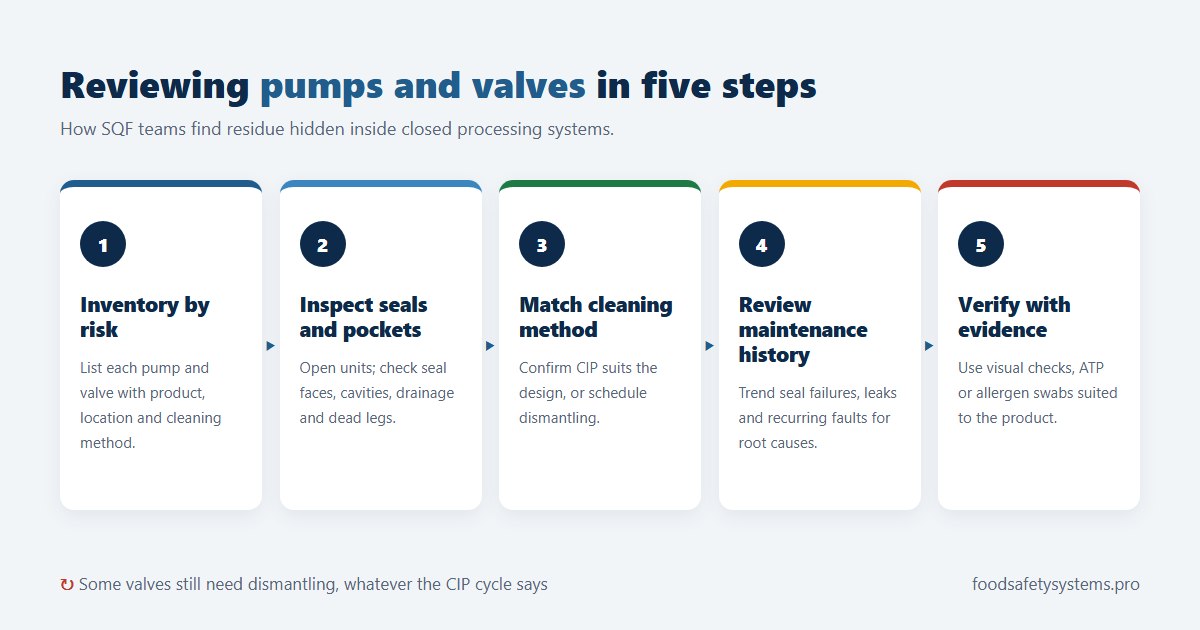
Five steps for a pump and valve hygienic design review
1. Inventory pumps and valves by product risk
List each pump and valve, its location, the product it handles and how it is cleaned. Then prioritize those in contact with ready-to-eat or allergen-containing products.
2. Inspect seals, dead spaces and drainability
Open representative units and look at seal faces, cavities and connections. Check whether liquid remains after draining and whether any branch lines sit outside the cleaning flow.
3. Confirm cleaning method compatibility
Compare the cleaning procedure with the design. For example, a valve that needs dismantling should not rely on CIP alone. Also confirm that chemicals and temperatures suit the seal and gasket materials.
4. Review maintenance history
Look at repair records, seal changes and recurring faults. Leaking seals can introduce lubricant or trap product. Frequent failures often point to a design or material mismatch.
5. Verify with evidence suited to the product
Select verification that fits the risk, such as visual inspection after dismantling, ATP or allergen swabs, or environmental monitoring where it is part of the program. Retain the results and link them to corrective actions.
Common problems found in pumps and valves
- Residue behind pump seals or inside valve cavities after cleaning.
- Dead legs left by removed or bypassed equipment.
- Valves cleaned in place when the design requires dismantling.
- Seal materials degraded by cleaning chemicals or temperature.
- No routine inspection of internal surfaces.
- Repeated seal failures closed as maintenance jobs without root cause review.
Records and evidence to keep
Good records show that pump and valve hygienic design has been reviewed and that cleaning works in practice. Keep:
- An equipment list with product, cleaning method and dismantling frequency.
- Inspection findings with photos and risk ratings.
- Cleaning procedures and CIP parameters for each circuit.
- Verification results, such as swabs or visual checks after dismantling.
- Seal and gasket replacement records.
- Corrective actions with owners, deadlines and closure evidence.
Allergen changeovers deserve special attention in closed systems. Our allergen control verification page explains how to prove cleaning removes allergen residues.
Example scenario: allergen findings at a diverter valve
In this illustrative example, a dressing plant runs an egg-containing product followed by an egg-free product on the same line. Allergen swabs after cleaning are mostly negative. However, the occasional positive appears near a diverter valve.
The team reviews the valve and finds a cavity that holds product when the valve is in one position. The CIP cycle does not move the valve through all positions, so part of the cavity is never cleaned.
Engineering updates the CIP sequence to cycle the valve, and sanitation adds a periodic dismantling check. Follow-up swabs confirm the change works. The team records the finding, actions and verification as closure evidence.
Pump and valve hygienic design checklist
- List pumps and valves by product, risk and cleaning method.
- Inspect seals, cavities and connections for residue.
- Check drainability and remove dead legs.
- Match cleaning methods to the design, including dismantling.
- Confirm seal and gasket materials suit product and chemicals.
- Review maintenance history for recurring faults.
- Verify cleaning with evidence suited to the product.
- Track corrective actions to documented closure.
Frequently asked questions
Are clean-in-place pumps and valves always hygienic?
No. CIP only works when the design, flow, chemistry and sequence suit each component. Some valves still need periodic dismantling and inspection.
How do we decide which pumps and valves to review first?
Start with those handling ready-to-eat or allergen-containing products, and those with repeat sanitation or maintenance findings.
Who should be involved in a pump and valve hygienic design review?
Sanitation, maintenance, engineering and food safety staff should review findings together, because fixes often affect all four areas. Our SQF sanitation requirements guide shows how auditors examine this evidence.
How Consultare Inc. Group can help
Consultare Inc. Group helps SQF teams document equipment design findings, align sanitation and maintenance actions and organize readiness evidence. Exact deliverables depend on the approved scope. Facility management retains responsibility for approving and implementing changes, and we do not promise certification, regulatory approval or a particular audit outcome.
- SQF gap assessments and internal audits: closed-system sanitation review.
- Corrective action support: root cause analysis for repeat residue findings.
- FDA compliance integration: align your SQF system with cGMP expectations.
- Compliance huddle training: short sessions for sanitation and maintenance staff.
Need help managing your SQF responsibilities?
Discuss your products, documentation and compliance priorities with the Consultare team in a free consultation, or contact our team.
Start building your compliance system
Prefer to organize your compliance activities yourself? Create a free SystemsBuilder account to manage specifications, controlled documents, assigned actions and records in one structured workflow. Software supports record management; it does not by itself ensure compliance.
Technical sources: 21 CFR 117.40, 21 CFR 117.80 and SQFI. Independent educational content: Consultare Inc. Group is not affiliated with or endorsed by SQFI, FDA, EHEDG or 3-A. This article is not legal advice, regulatory approval, certification or a guarantee of compliance; requirements depend on the facility, food, jurisdiction and applicable program, so confirm current requirements and obtain qualified technical review before implementation.