
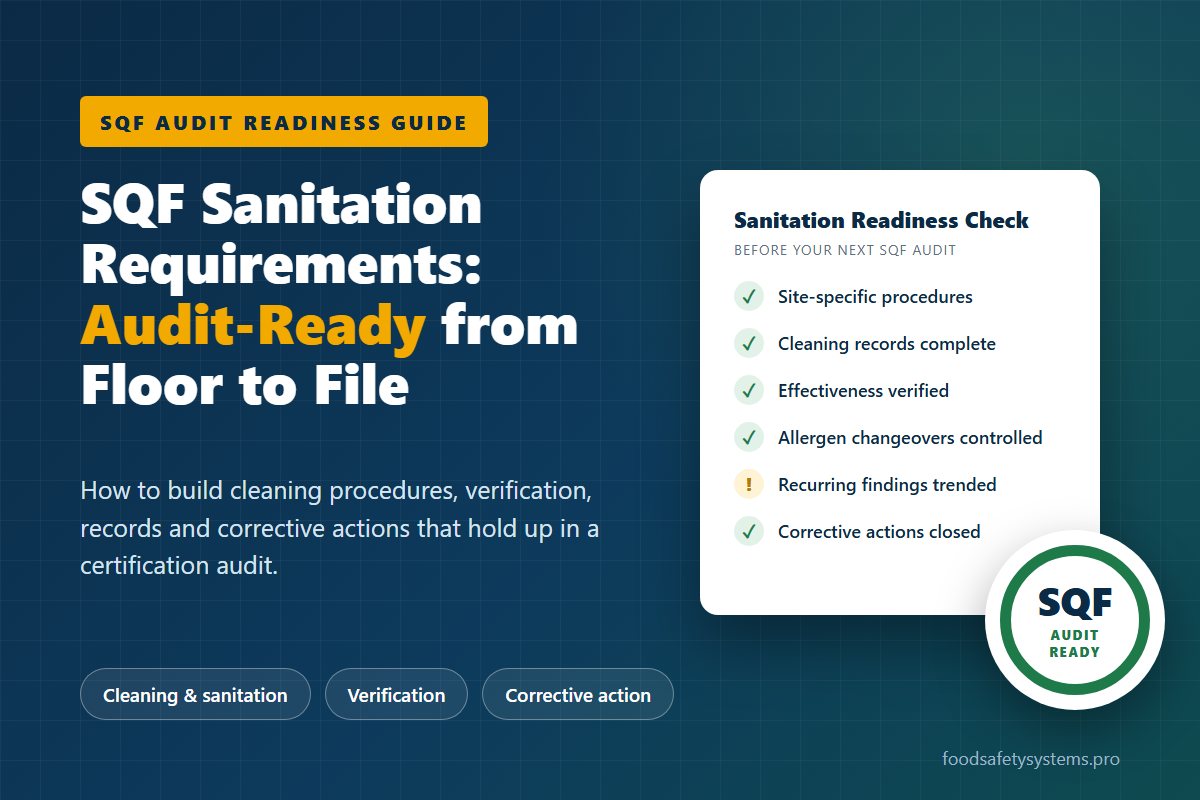
SQF sanitation requirements are one of the clearest ways a food manufacturing facility shows that its food safety system works in practice. An approved procedure may describe what should happen, but an auditor will also look for evidence that cleaning activities are performed, problems are corrected and the program remains effective. For organizations preparing for SQF certification or maintaining an existing certificate, sanitation should be treated as an operational control, not merely a documentation exercise.
This guide walks through the five areas that most often decide whether a hygiene and sanitation program holds up during a certification audit.
Build SQF sanitation procedures around actual operations
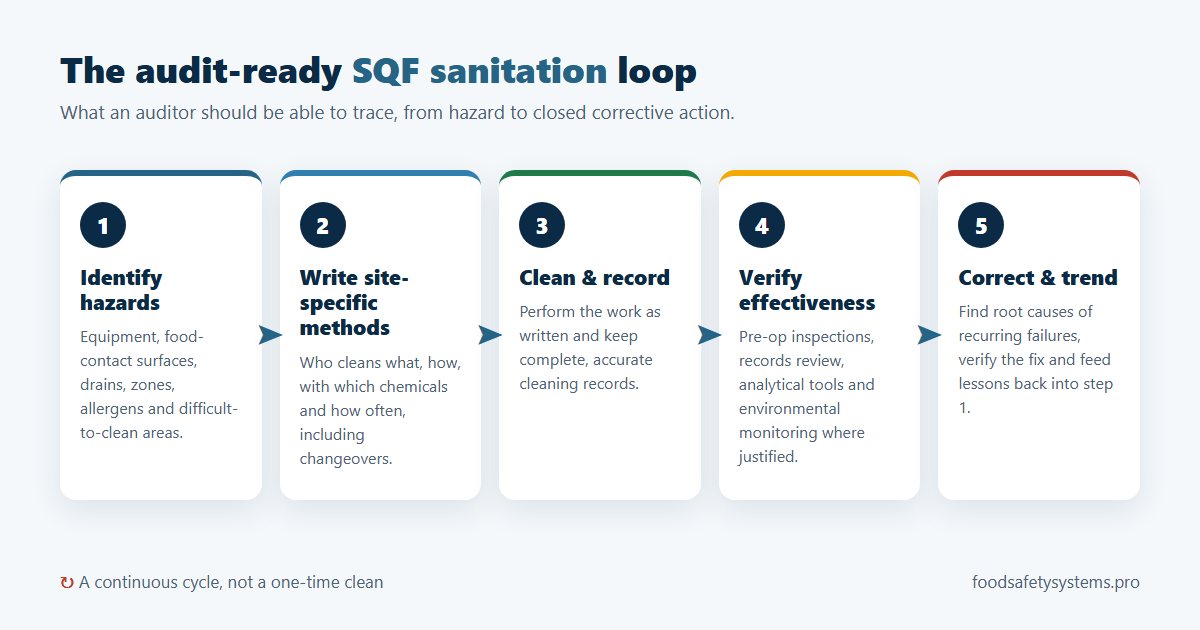
Identify the equipment, utensils, food-contact surfaces, drains, processing zones, cleaning methods, chemical controls, assigned personnel and frequencies relevant to your site. Make procedures specific enough to follow consistently. Consider difficult-to-clean areas, equipment disassembly, startup checks and changeovers. Generic instructions rarely provide adequate direction for a complex operation.
Separate cleaning from verification
Completed cleaning records demonstrate that an activity was performed; they do not, by themselves, establish effectiveness. Select verification methods appropriate to the facility’s hazards and processes. These may include pre-operational inspections, records review, appropriate analytical tools and environmental monitoring where justified. Investigate failures and document decisions before affected equipment or product is released, as applicable. Our overview of validation and verification of control measures explains how verification fits into the wider SQF system.
Manage allergens and high-risk areas deliberately
Where allergen cross-contact or environmental contamination is reasonably foreseeable, design practices for equipment changeovers, traffic flow, personnel hygiene, utensils, waste handling and segregation. Confirm that cleaning processes are appropriate for the residues and risks involved. For more detail, see our guides to allergen control measures and SQF allergen control.
Review corrective actions and trend recurring sanitation problems
A recurring residue finding, a repeatedly missed cleaning task or a persistent environmental result should lead to more than a one-time re-clean. Assess root causes such as access, equipment design, staffing, training or ineffective instructions. Track corrective actions through verification of effectiveness, as described in our corrective and preventive action (CAPA) process guide.
Prepare for the transition to SQF Edition 10
SQFI published SQF Code Edition 10 in March 2026. According to the SQFI Edition 10 FAQ, audits to Edition 10 are anticipated to begin on January 2, 2027, but that date depends on GFSI benchmarking and may move later. Facilities should verify which edition currently governs their audit, review the applicable code changes and plan a controlled transition, rather than treating Edition 10 as already mandatory.
SQF sanitation audit-readiness checklist
Before your next audit, confirm that you can answer “yes” to each of these questions:
- Do written sanitation procedures reflect the equipment, zones and changeovers actually on your production floor?
- Are cleaning records complete, accurate and kept separate from verification evidence?
- Is the verification method for each area appropriate to its hazards, including environmental monitoring where justified?
- Are allergen changeovers and high-risk areas controlled with defined practices for people, utensils, waste and traffic flow?
- Are recurring sanitation findings trended, investigated for root cause and closed with verified corrective actions?
- Have you confirmed which SQF Code edition applies to your next audit?
What should your facility do next?
An audit-ready sanitation program links hazards, written methods, actual practices, verification evidence and corrective action. Before your next audit, walk the production floor with the relevant procedures and records. Ask whether a new employee could perform the work correctly, and whether an auditor could trace an identified failure through investigation and closure.
Related services that support SQF sanitation readiness
Depending on your facility, products and compliance needs, the following service areas may be relevant:
- SQF gap assessments and internal audits: evaluate sanitation weaknesses and identify readiness gaps.
- SQF food safety system development: integrate sanitation procedures, verification and corrective action into the broader system.
- SQF audit readiness coaching: prepare staff and records for certification audit expectations.
- Corrective action support: investigate recurring sanitation findings and document sustainable corrections.
- Document control and post-certification support: maintain controlled procedures, records and ongoing compliance.
You can also browse all of our SQF consulting services.
Work with Consultare Inc. Group
Talk to Consultare Inc. Group about strengthening your SQF food safety system and sanitation audit readiness. Pick a time that suits you, or contact our team.
Technical sources: SQFI Food Safety Program and SQFI Edition 10 FAQ. This article is educational; specific requirements depend on your product, facility, certification scope and applicable regulations.