
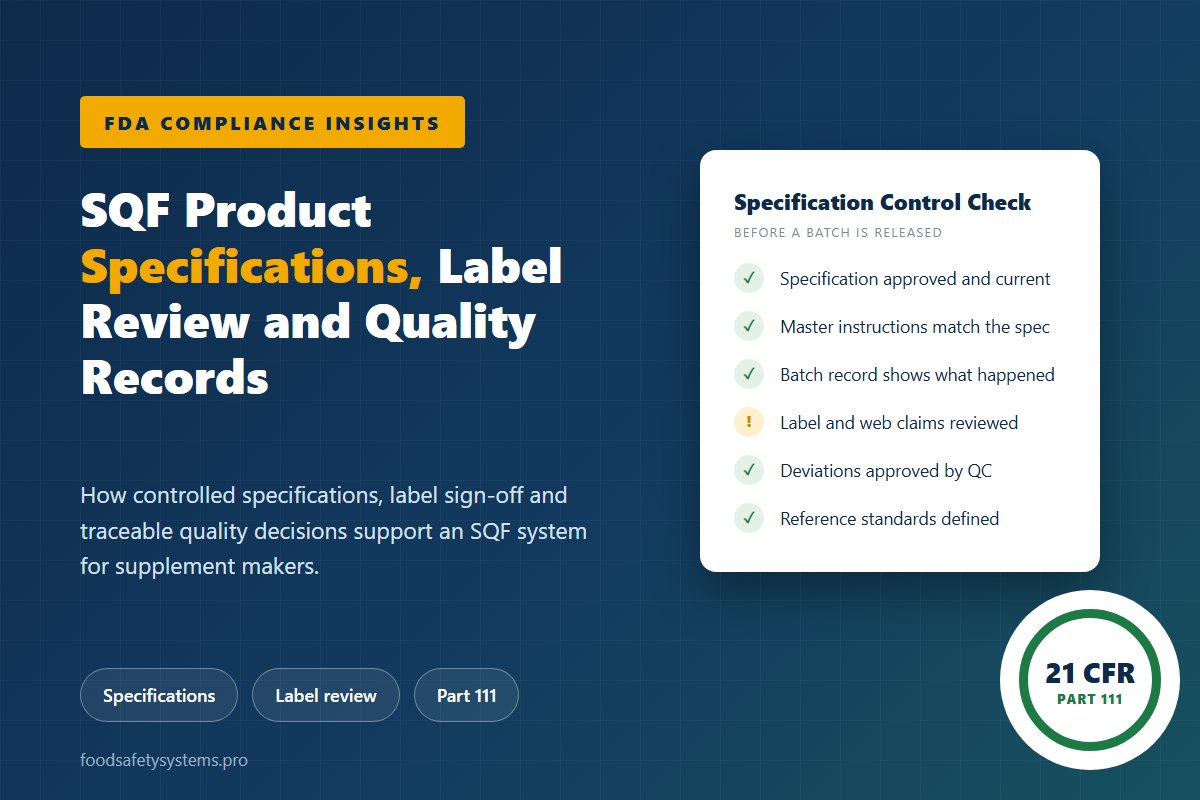
SQF product specifications are the reference point for every quality decision a supplement or food manufacturer makes: what to buy, how to make it, what to put on the label and whether a batch can be released. FDA warning letters to dietary supplement firms keep pointing to the same gaps: missing or unapproved specifications, master instructions that do not match production, batch records that do not show what really happened, and website claims nobody reviewed. An SQF food safety system can organize the documents, reviewers and evidence behind those decisions, but SQF certification does not replace dietary supplement CGMP under 21 CFR Part 111 or FDA rules on drug claims.
This guide is for SQF-certified or SQF-seeking food and supplement businesses that want their specifications, label review and quality records to hold up in both a certification audit and an FDA inspection.
Maintain approved SQF product specifications
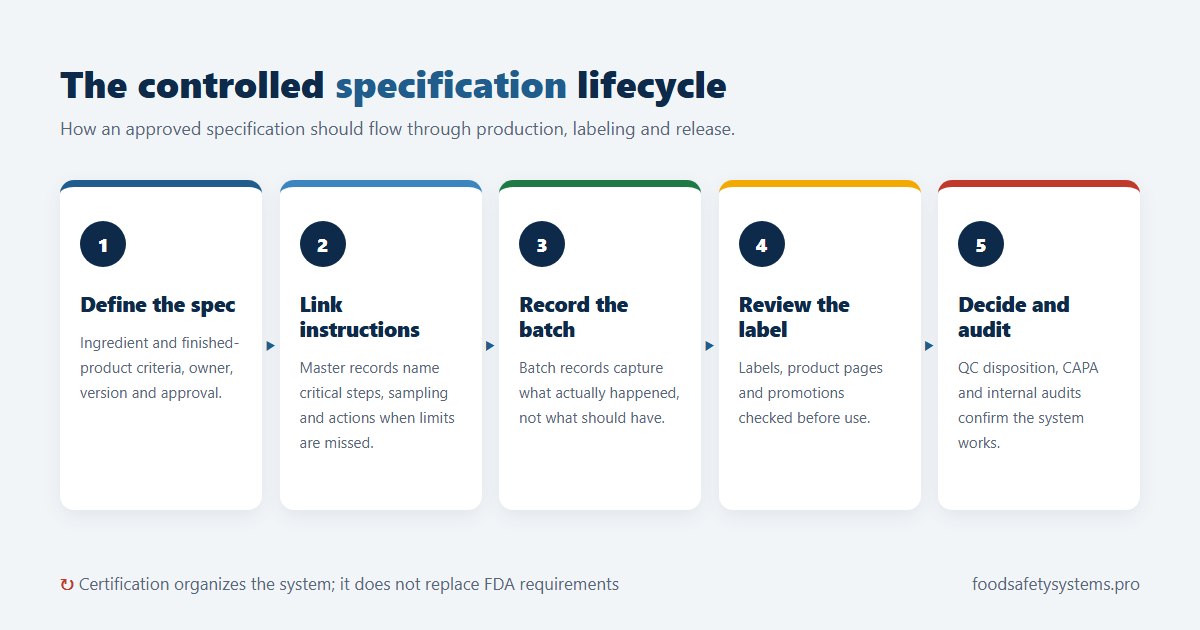
Every raw material, ingredient, packaging material and finished product needs a current, approved specification with a named owner, a revision history and an approval status. Link ingredient specifications to the finished-product criteria and to the products that use them, so a change in one is visible in the others. Keep site-specific SQF requirements separate from your legal obligations: Part 111 itself requires dietary supplement manufacturers to establish specifications for components, in-process controls and finished batches (21 CFR 111.70). Our guide to supplier specification verification covers how to confirm that incoming materials actually meet them.
Connect procedures to production records
Master manufacturing instructions should identify the important processing steps, packaging and labeling requirements, sampling methods and the action to take when a specification is not met. Then check that completed batch records capture what actually happened on the line, including deviations, rather than restating what the instructions say should happen. Part 111 sets out these expectations for the master manufacturing record and the batch production record.
Review label and website claims before use
Put labels, product names, e-commerce descriptions and promotional materials under the same controlled review as any other document. FDA can use statements on a product page, in social media or in advertising to decide a product’s intended use. Claims that a product treats, cures, mitigates or prevents a disease can make it an unapproved drug, so that wording needs a separate regulatory and legal assessment. See our companion article on dietary supplement claims review for a full workflow.
Keep quality decisions traceable
Define who has authority to approve specifications, changes, deviations and batch disposition. For each decision, record the reviewer, the rationale, the supporting evidence and the closure. When an auditor or investigator asks why a batch was released, the answer should be in the record, not in someone’s memory.
Standardize laboratory comparisons
Set scientifically appropriate reference standards and acceptance criteria for testing. Comparing a new batch with the appearance of the most recently manufactured batch is not a valid release criterion: it allows drift from one batch to the next. Identity, purity, strength and composition criteria should come from the approved specification.
Audit implementation and improvement
Use your internal audit program and corrective and preventive action process to confirm that specification and document control works in practice, not only in written procedures. Sample batch records against their specifications and check that live labels match the approved versions.
SQF product specifications checklist
- Have you confirmed each product’s FDA classification, your business role and the regulatory framework that applies?
- Is every specification current, approved and backed by evidence?
- Do controlled instructions match the records of actual operations?
- Are deviations, labels and product information reviewed and approved by qualified people?
- Are corrective actions documented with owners, follow-up and an effectiveness check?
Frequently asked questions
Does SQF certification or a HACCP plan demonstrate compliance with FDA dietary supplement CGMP?
No. Certification programs and HACCP have their own purposes. Part 111 obligations and any other applicable requirements must be assessed on their own.
Do claims on an online product page matter to FDA?
Yes. FDA may consider website, label and promotional statements when it evaluates a product’s intended use, including statements about treating or preventing disease.
Why are manufacturing and quality records so important?
Specifications, production instructions, completed batch records, laboratory criteria and quality control decisions are the evidence that an established process was followed and that deviations were handled.
How Consultare Inc. Group can help
Consultare Inc. Group provides professional food safety and regulatory compliance support, tailored to your products, the requirements that apply and the agreed scope of work.
- SQF gap assessments and internal audits: find specification and record gaps before your auditor does.
- Document control services: set up controlled specifications, approvals and revision histories.
- FDA compliance integration: align your SQF system with applicable FDA rules, including label review coordination.
- Corrective action support: close findings with evidence that the fix works.
For dedicated dietary supplement CGMP support, see our sister site DietarySupplements.pro.
Need help managing your SQF responsibilities?
Discuss your products, documentation and compliance priorities with the Consultare team in a free consultation, or contact our team.
Start building your compliance system
Prefer to organize your compliance activities yourself? Create a free SystemsBuilder account to manage specifications, controlled documents, assigned actions and records in one structured workflow. Software supports record management; it does not by itself ensure compliance.
Technical sources: 21 CFR Part 111 and SQFI. This article is educational; specific requirements depend on your products, facility, certification scope and applicable regulations.