
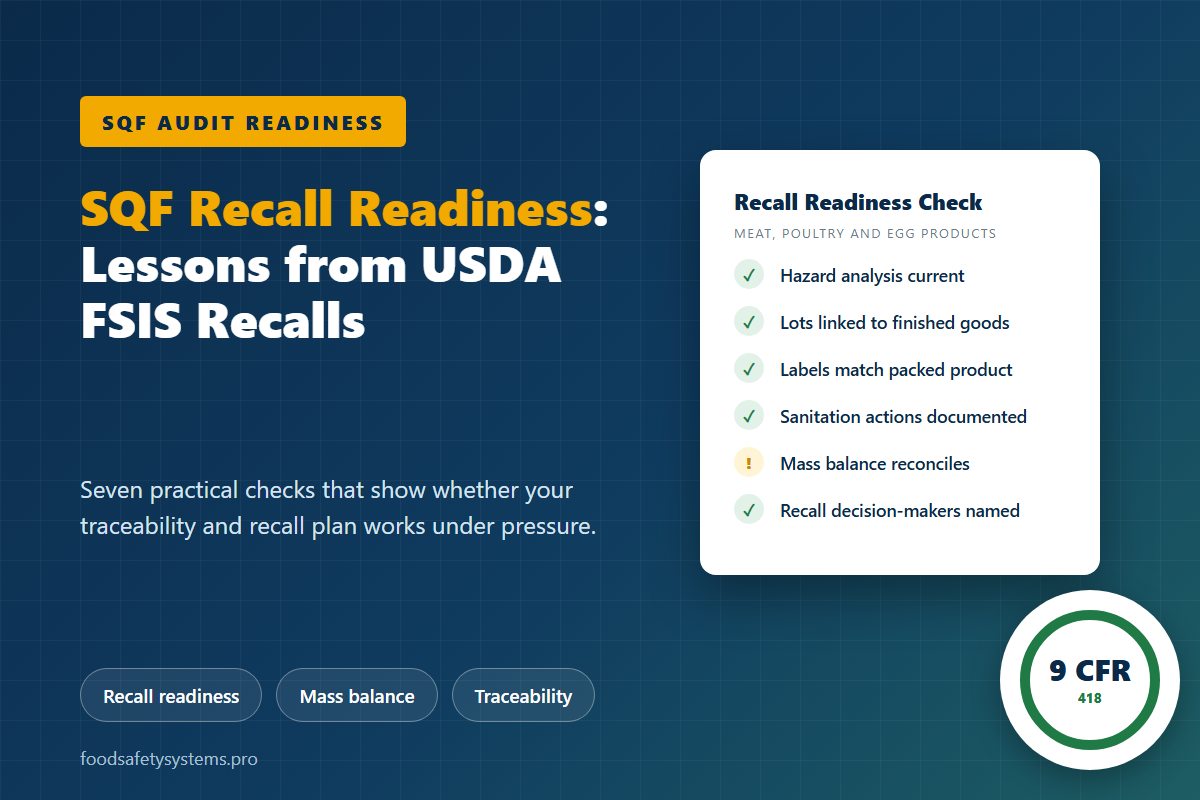
SQF recall readiness is the ability to find, hold and recover every affected product quickly, with records that prove you got it all. USDA FSIS recalls of meat, poultry and egg products show why manufacturers must be able to identify affected products fast, investigate hazards and control distribution. For operations pursuing SQF certification, recall readiness is not a binder exercise. It tests whether supplier controls, production records, product identification and corrective actions work together under pressure.
FSIS publishes every recall and public health alert on its recalls page, and establishments it regulates must keep written recall procedures under 9 CFR Part 418. Misbranding and undeclared allergens, Listeria, E. coli O157:H7 and foreign materials are recurring causes. The seven checks below apply to any food business.
Seven practical controls for SQF recall readiness
1. Hazard analysis and controls
Reassess biological, chemical, allergen and physical hazards against the site’s actual products and processes. A hazard analysis that has not kept up with new products or suppliers is a common root cause.
2. Supplier and ingredient information
Link incoming lots, specifications and approval status to the finished products that used them, through your approved supplier program.
3. Label and allergen verification
Check that approved artwork, recipes and the product actually packed match before release. Wrong-package and wrong-label errors cause a large share of recalls. See our allergen control verification guide.
4. Sanitation and environmental controls
Review pre-operational checks, cleaning verification and the actions taken after unsatisfactory results.
5. Traceability and mass balance
Practice linking raw material receipts, rework, finished lots, shipping units and customer records. A mass balance that reconciles quantities in and out is the proof that nothing went missing.
6. Withdrawal and recall decision-making
Decide in advance who makes recall decisions, who communicates with customers, and who coordinates with authorities when needed. Keep contact lists current.
7. Corrective action effectiveness
Confirm that root causes are addressed and that changes prevent repeat incidents, using a structured CAPA process.
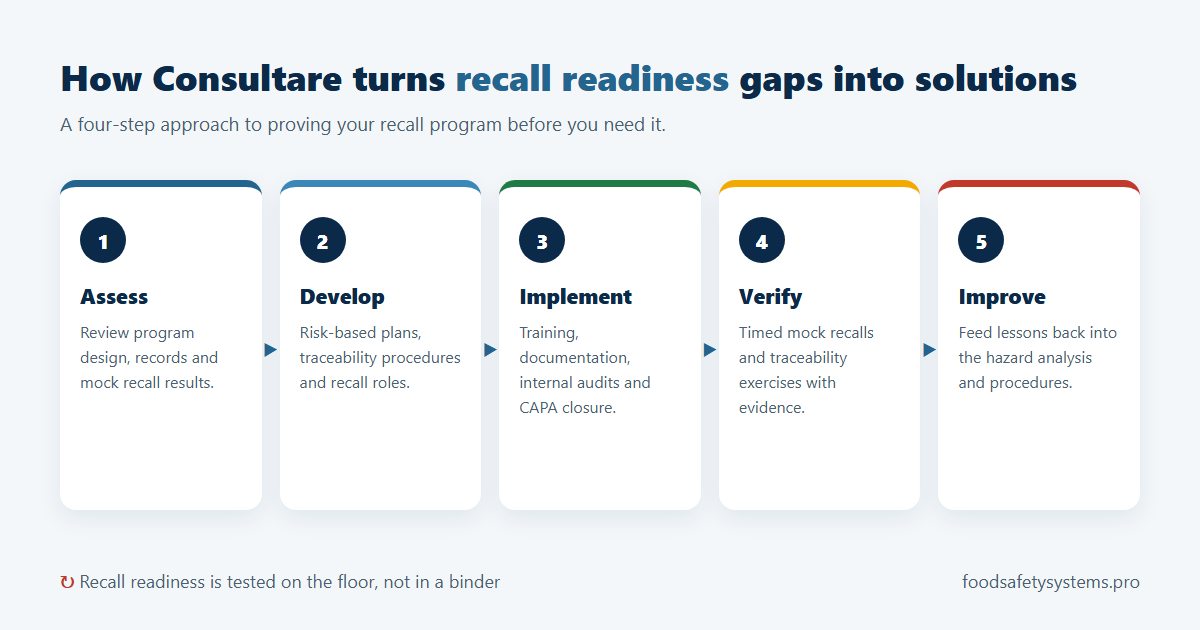
How Consultare Inc. Group turns gaps into solutions
Assess
Review SQF program design, records, mock recall results and operational gaps against the SQF Code that applies to the site.
Develop
Prepare risk-based improvement plans, revised traceability procedures and practical recall response roles.
Implement
Support training, documentation, internal auditing and corrective action closure.
Verify
Run mock recall or traceability exercises and review evidence of implementation. Our annual mock recalls and product recall and withdrawal procedure guides explain what SQF expects.
Related Consultare services
- SQF gap assessments and mock audits
- Food safety system development
- Corrective action support
- SQF audit readiness coaching
- SQF crisis and regulatory support
Need help managing your SQF responsibilities?
Whether you are pursuing SQF certification, preparing for an audit, reviewing an existing food safety system, addressing audit findings or strengthening your compliance processes, you do not have to manage it alone. Food Safety Systems helps food businesses understand, develop, implement, maintain and strengthen their SQF food safety management systems based on their operations and certification goals.
Speak with our team about your SQF requirements, food safety documentation, audit readiness, corrective actions or improvement priorities, or contact our team.
Start building your compliance system
Prefer to organize your compliance activities yourself? Create a free SystemsBuilder account and begin building a structured system for your compliance documentation and processes. The right time to address a gap is before it becomes a business problem.
Technical sources: USDA FSIS Recalls and Public Health Alerts and 9 CFR Part 418. This article is educational; specific requirements depend on your products, facility, certification scope and applicable regulations.