
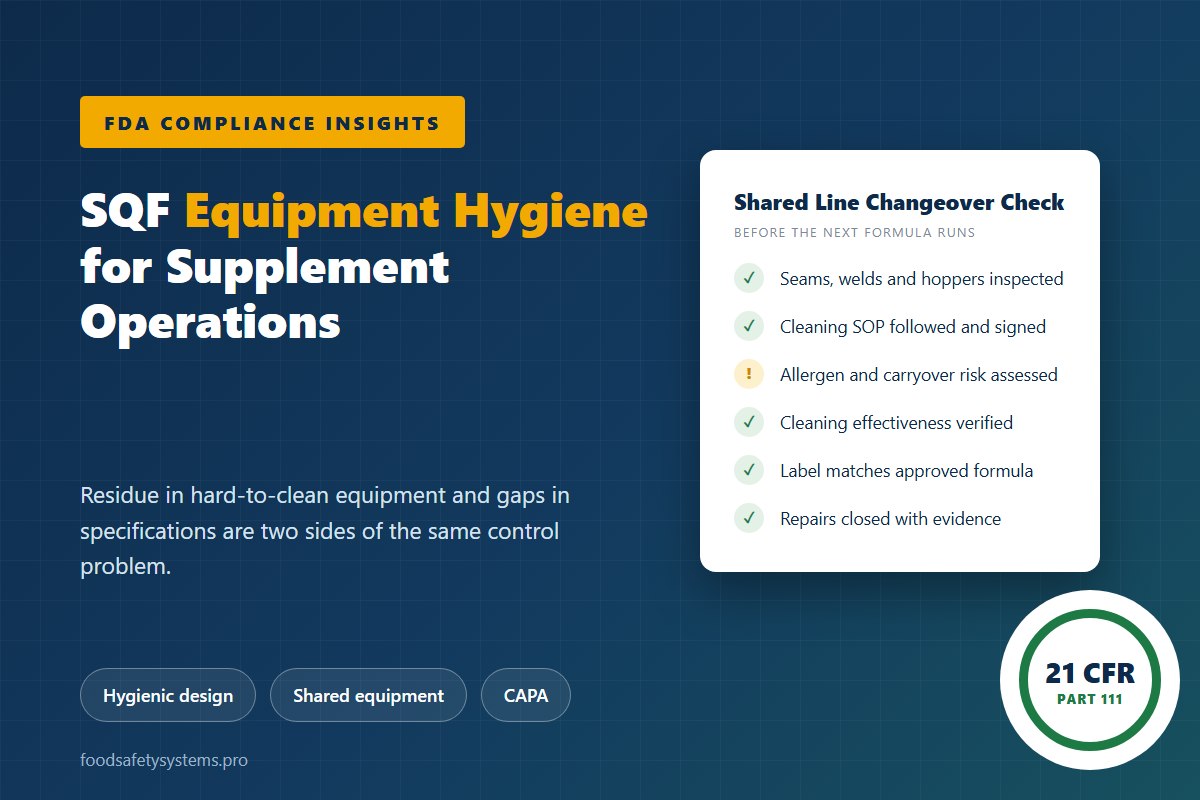
SQF equipment hygiene is where facility conditions and quality records meet: residue trapped in a poorly designed hopper and a finished-product specification that does not match the label are both signs that the system is not in control. SQF-based management can reinforce equipment inspection, cleaning verification, material controls and controlled specifications. Before deciding which requirements apply, establish the applicable SQF Code, your product scope and your regulatory jurisdiction. Dietary supplement operations are regulated by FDA under 21 CFR Part 111; SQF requirements apply when a site pursues certification within a relevant scope.
This article is for SQF practitioners, supplier assurance teams and manufacturers running shared equipment.
Inspect hygienic equipment design
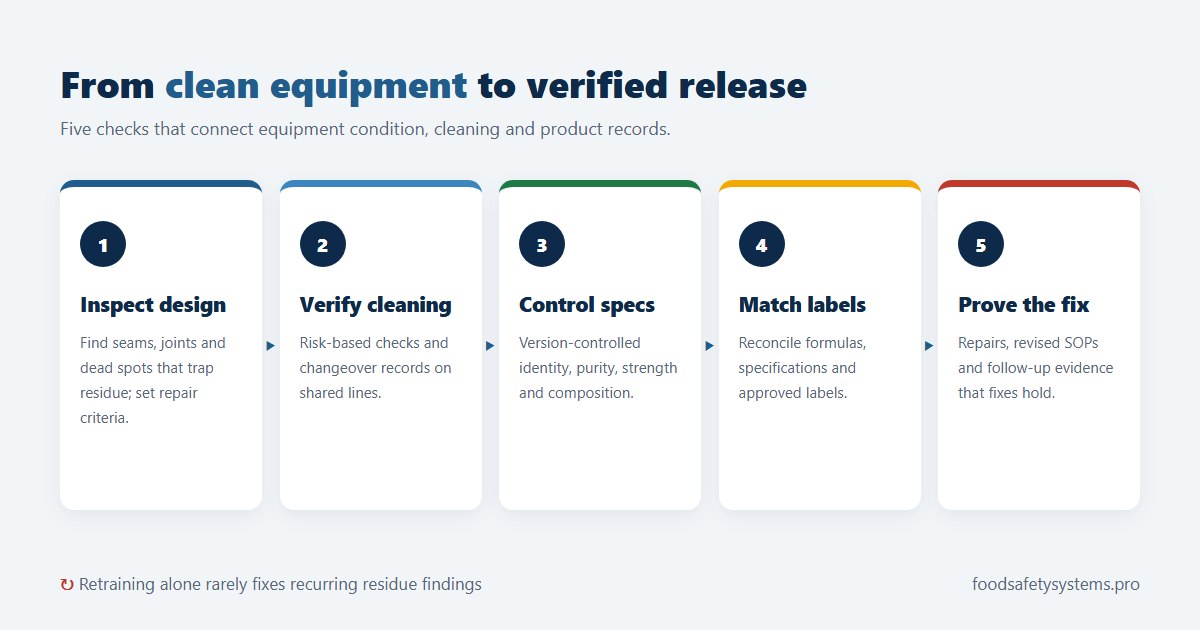
Review seams, welds, hoppers, joints, gaskets and other hard-to-clean locations. Set documented acceptance criteria for equipment condition and repairs, and make sure maintenance work is signed off by someone who checks cleanability, not only function. Part 111 Subpart D requires equipment and utensils to be of appropriate design and construction and to be maintained, cleaned and sanitized. Our page on facility design and maintenance covers the SQF side of this work.
Verify SQF equipment hygiene on shared lines
When different formulas run on the same line, assess carryover and allergen cross-contact risks for each changeover. Use risk-appropriate cleaning checks, such as visual inspection, rinse or swab testing and allergen verification, and keep changeover records that show the line was released by an authorized person. Our hygiene and sanitation programs and allergen control verification guides explain how to set this up.
Control finished-product specifications
Maintain version-controlled identity, purity, strength and composition criteria where the product’s regulatory framework requires them. An old specification left in a production binder is as much a hygiene risk as a dirty valve: people work to whatever document is in front of them.
Connect labels to controlled formulas
Reconcile ingredient declarations, approved formulas, product specifications and approved labels before release and whenever any of them changes. A formula change that never reached the label is a labeling error and, for allergens, a recall risk.
Audit master manufacturing records
Verify that production instructions, sampling references, expected yields and deviation thresholds are defined where required, and that batch records show they were followed. Records are the evidence that cleaning and changeover actually happened.
Confirm corrective action with physical evidence
When residue or equipment findings recur, retraining staff is rarely enough. Document the repair, the revised SOP, inspection photographs or records, and follow-up evidence that the fix remains effective. Our CAPA process guide shows how to verify effectiveness.
SQF equipment hygiene checklist
- Have you identified which FDA regulations and certification requirements apply to the actual product and activities?
- Have you reviewed cleanability, shared-equipment risks, cleaning SOPs and evidence that they are followed?
- Are finished-product specifications, approved formulas, labels and production records consistent?
- Are deviations documented with root cause, corrective action, verification evidence and an owner?
Frequently asked questions
Does SQF certification replace FDA dietary supplement CGMP?
No. Voluntary certification and FDA requirements have different scopes. Certification does not replace any duty under 21 CFR Part 111.
Is staff retraining enough after recurring residue findings?
Not by itself. Equipment suitability, SOPs, how cleaning is carried out and the evidence that it works may all need review.
Should label and specification changes be linked?
Yes. A controlled change process helps prevent discrepancies between approved formulas, finished-product specifications and labels.
How Consultare Inc. Group can help
Consultare Inc. Group helps organizations strengthen their food safety programs, with scope tailored to the product, the facility and the requirements that apply.
- SQF gap assessments and internal audits: hygienic equipment reviews and sanitation verification.
- Supplier verification support: supplier assurance for the materials that run on your lines.
- Document control and corrective action support: keep specifications, SOPs and CAPA records current.
For dedicated dietary supplement CGMP support, see our sister site DietarySupplements.pro.
Need help managing your SQF responsibilities?
Discuss your products, documentation and compliance priorities with the Consultare team in a free consultation, or contact our team.
Start building your compliance system
Prefer to organize your compliance activities yourself? Create a free SystemsBuilder account to manage specifications, controlled documents, assigned actions and records in one structured workflow. Software supports record management; it does not by itself ensure compliance.
Technical sources: 21 CFR Part 111 and SQFI. This article is educational; specific requirements depend on your products, facility, certification scope and applicable regulations.