
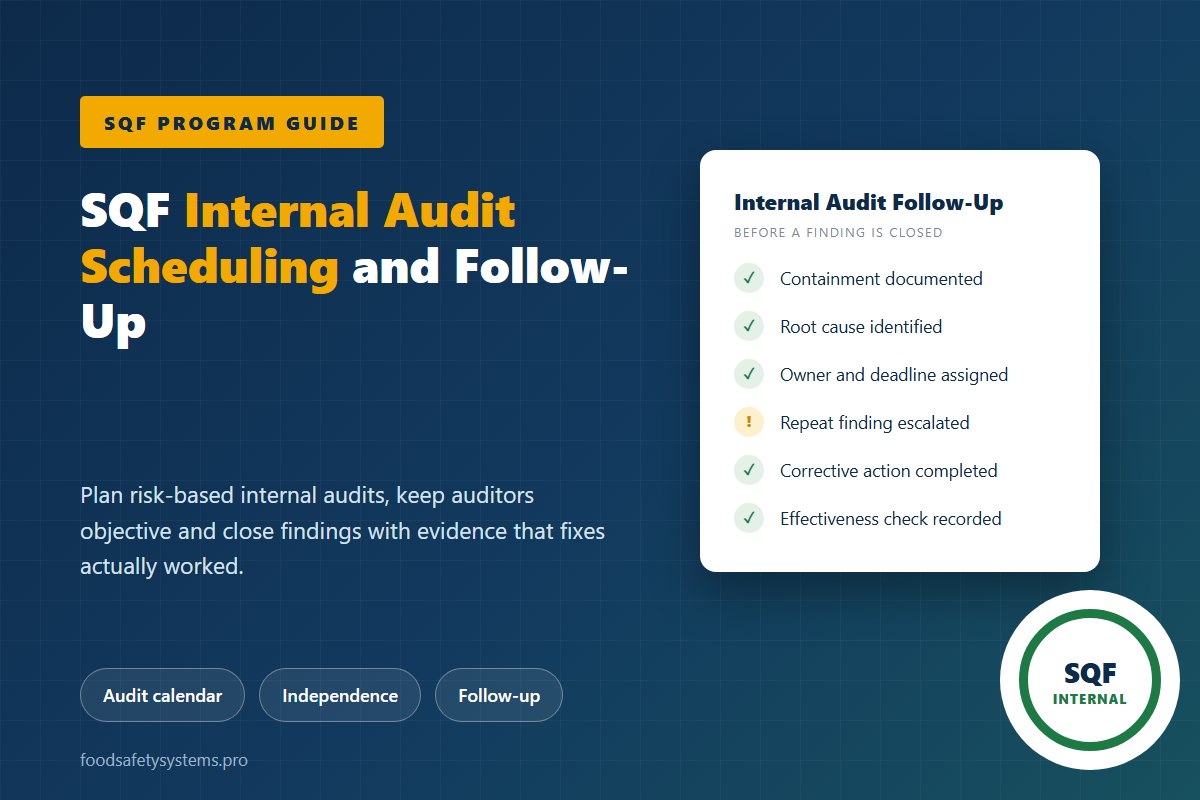
Good internal audit scheduling tests whether your SQF food safety system works on the floor, not just on paper. Food manufacturers that want to supply major retailers such as Costco need reliable, documented controls. They also need to explain those controls clearly. A risk-based audit calendar, independent auditors and closed findings give them that evidence.
Quick answer: plan internal audits around risk, assign objective auditors, collect verifiable observations and close every finding with an effectiveness check. Base the frequency on the site’s risk and the SQF edition in force. Regulatory duties depend on the product and facility, and retailer-specific conditions must be verified with the buyer.
Who this guidance is for
SQF practitioners, QA managers, internal auditors and food suppliers preparing for retail buyer reviews.
Design an internal audit scheduling calendar around risk
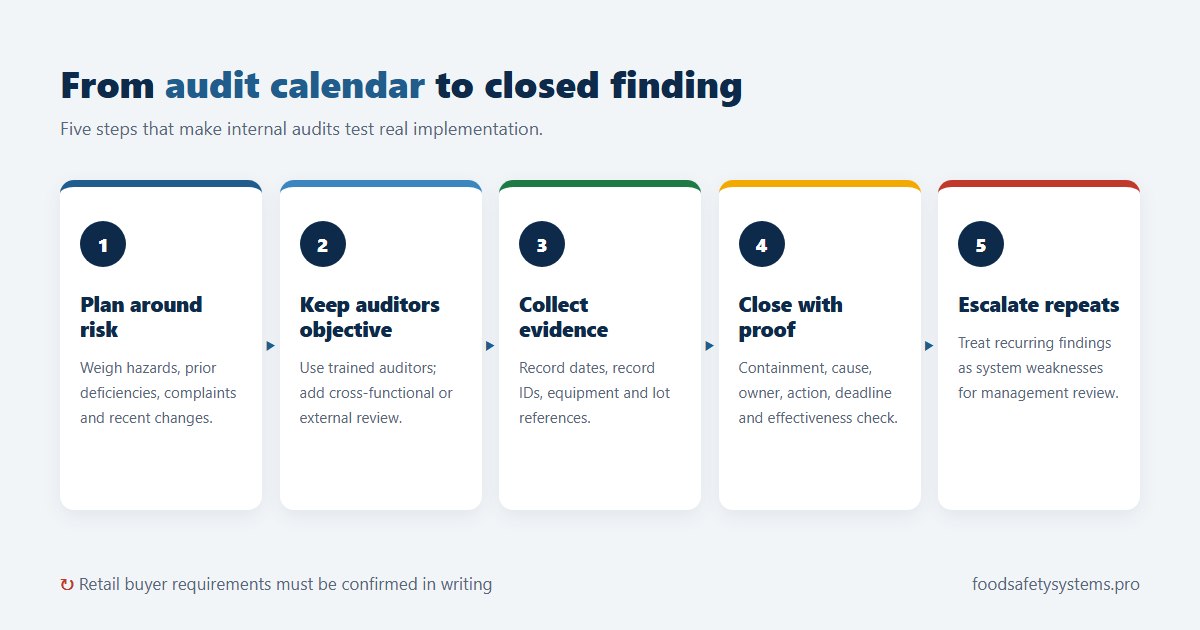
Start with processes, product hazards, prior deficiencies, consumer complaints, new equipment and personnel turnover. The schedule should cover the applicable code requirements and operating activities. Use a frequency justified by the site’s risk and the SQF edition in force; a generic schedule may not satisfy every scope. Our SQF Edition 10 overview explains the current code, and our SQF internal audit program page covers the program as a whole.
Preserve auditor independence
Assign trained auditors who can evaluate the activity objectively. In a small facility, full organizational independence can be difficult. In that case, reduce the risk through cross-functional review or external support, and record the rationale.
Collect verifiable observations
Trace examples from written procedures to production-floor practice. Record dates, record identifiers, equipment and lot references. Then separate compliant samples from nonconformities and improvement suggestions. Avoid unsupported “all satisfactory” statements, because they give reviewers nothing to verify.
Close findings with effectiveness evidence
For each finding, document containment, cause, owner, corrective action and deadline. Add a later effectiveness check to confirm the fix held. Repeat findings may signal a weakness in training, process design or management review rather than an isolated operator mistake. Our CAPA process guide and our page on annual management reviews show how to escalate recurring issues.
Relate audit readiness to retail supply
A supplier seeking Costco business may benefit from clear internal audit evidence. Even so, the buyer’s product and supplier onboarding criteria must be confirmed through its current written requirements and commercial contact. SQF certification and a strong audit record do not guarantee acceptance by any retailer.
Supplier readiness checklist
- Confirm applicable regulations, certification scope and buyer-specific requirements in writing.
- Identify the accountable process owner and current approved procedures.
- Collect recent objective records tied to the correct facility, product and lots.
- Resolve exceptions with documented corrective actions and effectiveness checks.
- Test record retrieval and make the review package available to authorized reviewers.
Frequently asked questions
What drives internal audit scheduling frequency?
Set the frequency from the site’s risk and the requirements of the SQF edition and scope in force. Higher-risk processes, prior deficiencies and recent changes usually justify more frequent coverage.
Can a small facility audit itself?
Yes, but auditors should still be objective. Where full independence is not possible, use cross-functional review or external support and document why.
When is an internal audit finding really closed?
When containment, root cause, corrective action and a later effectiveness check are all documented. Closing on the action alone leaves the risk of recurrence untested.
How Consultare Inc. Group can help
Consultare Inc. Group supports food safety program development, supplier documentation, regulatory readiness, quality system improvement and project coordination.
- SQF gap assessments and internal audits: independent internal audit support.
- Corrective action support: root cause and effectiveness checks.
- SQF audit readiness coaching: build a defensible audit calendar.
- SQF retail and wholesale solutions: prepare evidence for retail buyers.
Need help managing your SQF responsibilities?
Discuss your products, documentation and compliance priorities with the Consultare team in a free consultation, or contact our team.
Start building your compliance system
Prefer to organize your compliance activities yourself? Create a free SystemsBuilder account to manage specifications, controlled documents, assigned actions and records in one structured workflow. Software supports record management; it does not by itself ensure compliance.
Technical sources: SQFI. Independent educational content: this article is not legal advice or a statement of Costco supplier approval policy. Consultare Inc. Group is not affiliated with or endorsed by Costco Wholesale, SQFI or FDA, and has no authority to approve suppliers. Requirements may change; confirm current rules and written buyer terms before relying on this guide.