
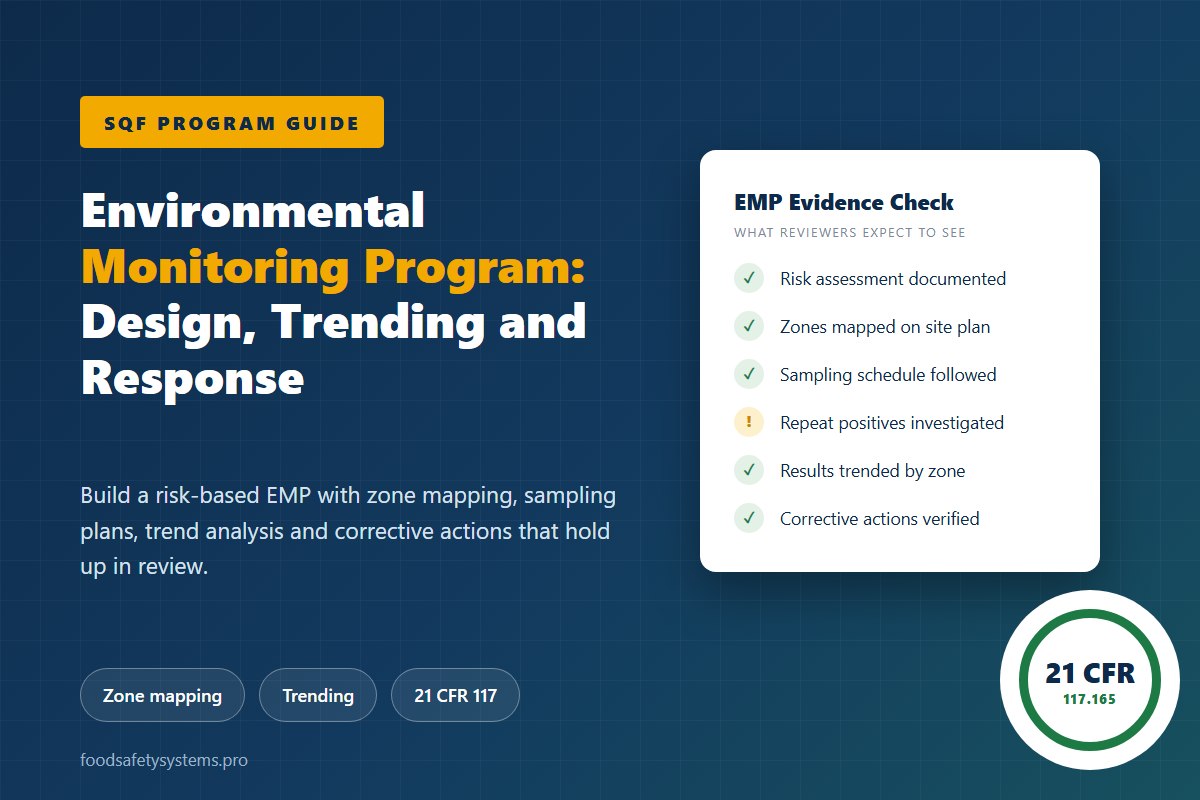
An environmental monitoring program (EMP) helps a food facility check whether its sanitation and hygienic controls are actually working. It matters most where the product, process, facility design or exposure conditions could let environmental pathogens or other contaminants reach food. Yet an EMP is not a substitute for sanitation, hygienic design, preventive controls or finished-product testing.
Quick answer: design the environmental monitoring program around the facility’s real hazards. Map hygienic zones, set risk-based sampling, define how positives are handled, and trend the results. Where contamination of ready-to-eat food with an environmental pathogen is a hazard requiring a preventive control, FDA verification rules in 21 CFR 117.165 require environmental monitoring.
Who this guidance is for
Food manufacturers preparing for Costco or other retailer reviews, SQF practitioners, sanitation leads, QA managers and internal audit teams.
Establish the purpose and risk basis
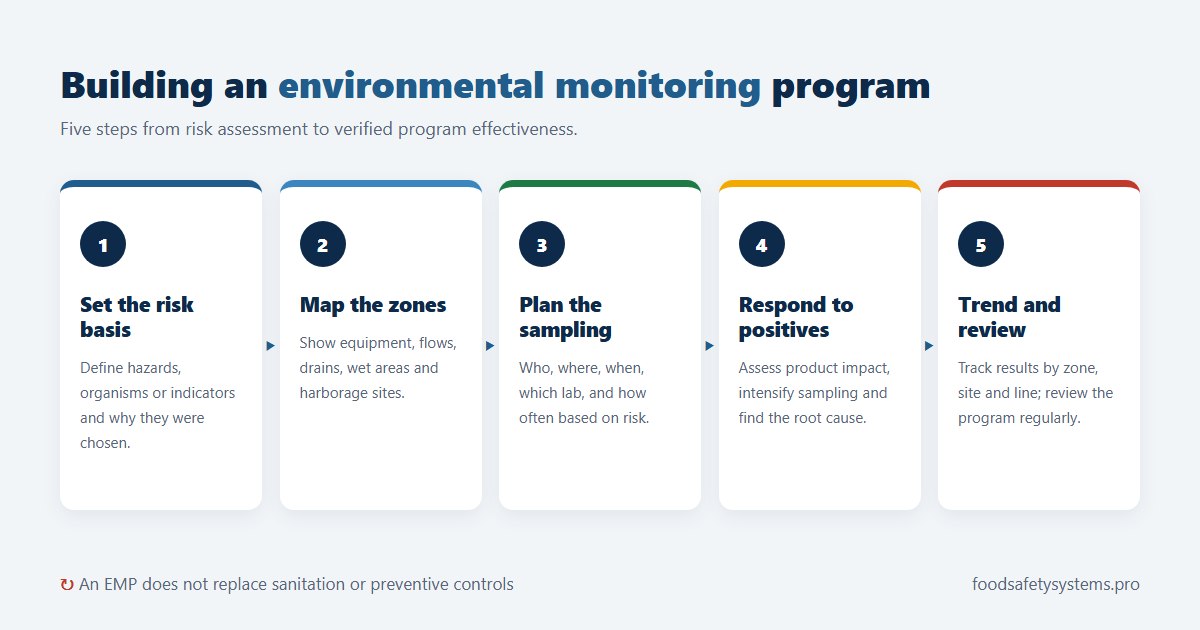
First, identify the products, processes, equipment, areas and conditions that influence contamination risk. For example, consider exposed ready-to-eat product, post-lethality handling, moisture, hard-to-clean niches and traffic patterns.
Then define which organisms or indicators you monitor and why you selected them. The program should rest on a documented risk assessment. It should also reflect applicable regulatory, customer and certification requirements.
Map the facility and sampling zones
Create a site map showing equipment, product flow, personnel movement, drains, wet and dry areas and potential harborage sites. Use a risk-based zoning approach. This separates direct product-contact surfaces from adjacent and more remote areas.
Choose sampling sites that can reveal weaknesses in hygienic controls. Rotate sites where appropriate, but keep enough consistency to spot recurring trends.
Set environmental monitoring program frequency, methods and responsibilities
Specify who collects samples, where and when sampling happens, and how samples are identified. State which laboratory or method is used and how results are communicated. In addition, include controls that stop sampling itself from spreading contamination.
Base sampling frequency on risk, process conditions, historical findings and applicable requirements. Avoid picking a frequency because it is convenient or copied from another facility.
Interpret results and investigate positives
Define how presumptive and confirmed results are handled. This includes product impact assessment, intensified sampling, sanitation review and escalation. Follow the facility’s validated response procedure and any regulatory or customer obligations.
Investigate potential harborage, equipment design, water accumulation, traffic, cleaning effectiveness and maintenance issues. A repeat positive at the same or a nearby site may point to a persistent problem that needs a deeper corrective action. Our Listeria environmental monitoring and sanitation article covers this for ready-to-eat facilities.
Trend data and verify program effectiveness
Trend results by organism or indicator, zone, site, production line, shift, date and relevant operating condition. Review both positive and negative patterns. Also track sample completion and overdue corrective actions.
Management should periodically assess whether the EMP still fits as products, equipment, layout and operations change. Our guide to annual management reviews shows how to bring trend data into that discussion. Finally, verify that corrective actions address root causes and reduce recurrence, as described in our CAPA process guide.
Prepare EMP evidence for customer and audit review
Maintain the risk assessment, facility map, sampling schedule, collection instructions and laboratory reports. Keep investigations, corrective actions, trend reports and management review records as well.
Confirm the current requirements communicated by the relevant Costco division or buyer. Do not assume that one sampling plan or organism list applies to every product category or supplier.
Supplier readiness checklist
- Document the EMP purpose and risk assessment.
- Map hygienic zones and risk-based sampling sites.
- Define sampling methods, frequency, responsibilities and laboratory arrangements.
- Establish response procedures for presumptive and confirmed findings.
- Trend results and investigate recurring patterns.
- Review program effectiveness and retain customer and audit evidence.
Frequently asked questions
Does an environmental monitoring program replace finished-product testing?
No. An EMP verifies whether sanitation and hygienic controls are effective. It works alongside sanitation, hygienic design, preventive controls and any product testing the facility needs.
How often should environmental samples be taken?
There is no single answer. Frequency should reflect risk, process conditions, historical findings and applicable regulatory, customer and certification requirements.
What does a repeat positive mean?
A repeat positive at the same or a nearby site may indicate harborage or another persistent problem. It usually calls for a deeper investigation and root-cause corrective action, not just re-cleaning.
How Consultare Inc. Group can help
Consultare Inc. Group supports EMP gap assessments, risk-based sampling plan reviews, facility documentation, trending frameworks, corrective-action workflows and audit-readiness preparation. Technical decisions are validated against the facility’s actual hazards and applicable requirements.
- SQF gap assessments and internal audits: EMP design and evidence review.
- Corrective action support: root-cause work for repeat positives.
- SQF audit readiness coaching: present EMP records with confidence.
- SQF retail and wholesale solutions: prepare for retail buyer reviews.
Need help managing your SQF responsibilities?
Discuss your products, documentation and compliance priorities with the Consultare team in a free consultation, or contact our team.
Start building your compliance system
Prefer to organize your compliance activities yourself? Create a free SystemsBuilder account to manage specifications, controlled documents, assigned actions and records in one structured workflow. Software supports record management; it does not by itself ensure compliance.
Technical sources: FDA Preventive Controls for Human Food, 21 CFR Part 117 and 21 CFR 117.165. Independent educational content: Consultare Inc. Group is not affiliated with or endorsed by Costco Wholesale, SQFI or FDA. Costco-specific supplier requirements must be confirmed directly with the relevant Costco contact. Regulatory applicability depends on the specific product, facility, activity and current law.