
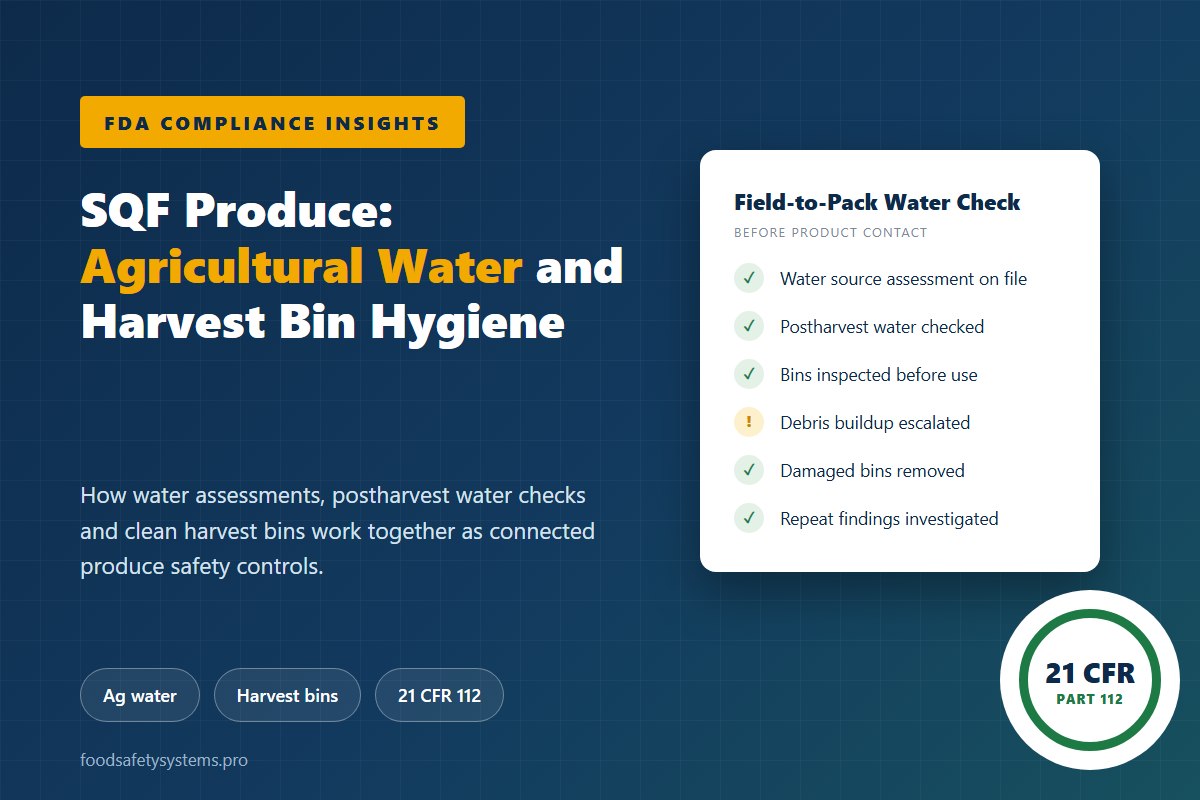
Agricultural water and harvest bin hygiene are connected risk controls: water, containers and handling practices can all carry contaminants onto fresh produce. Observations involving recirculated water, vegetative debris in bins and incomplete risk-assessment decisions show why documented controls must work in routine operations. This article offers general risk-management guidance rather than commentary about any named farm.
Quick answer: produce operations with an SQF-aligned food safety system should manage water hygiene, harvest bin handling and corrective-action records as one connected set of controls. FDA Produce Safety Rule duties under 21 CFR Part 112, Subpart E must be evaluated separately from SQF certification requirements.
Who this guidance is for
Produce farms, packing operations, SQF practitioners, food safety managers and internal auditors.
Map the farm-to-packing contamination routes
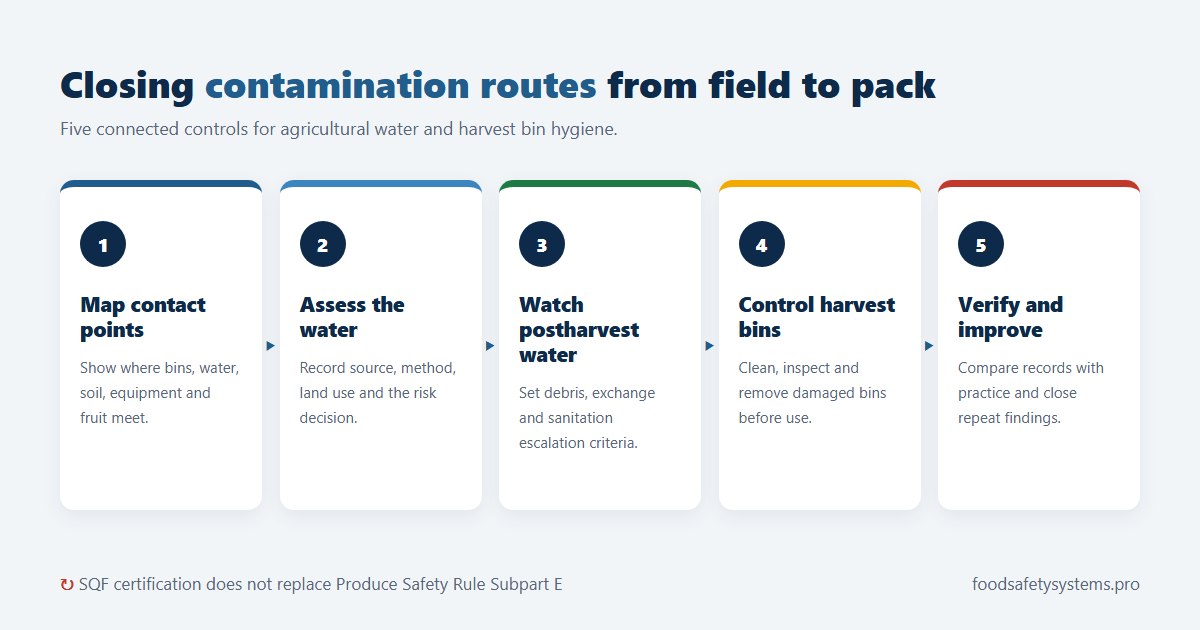
Start by documenting how harvest bins, irrigation water, postharvest water, orchard soil, equipment and fruit contact one another. Then identify the transfer points in receiving, dumping, washing, cooling and packing. This map becomes the basis for every control that follows. Our SQF primary plant production requirements page explains how the farm-level code frames these risks.
Control postharvest water conditions
Use defined inspection criteria for debris accumulation, water exchange, sanitation and escalation. In addition, keep records showing that each control actually happened, not merely that an SOP exists. Recirculated water deserves particular attention, because debris and organic load can build up during a shift.
Agricultural water and harvest bin hygiene: keep containers from transferring contamination
Assess how bins rest on the ground, collect soil or plant debris, are stacked and contact fruit. Next, set clear rules for cleaning, inspection, removal from service and corrective action. A bin that looks acceptable from a distance can still carry debris into the packing line, so check it before product contact.
Document preharvest water risk assessments
Evaluate agricultural water sources, irrigation methods, contact with covered produce, surrounding land uses and other relevant conditions. Record the determination and any risk-based measures it requires. Under 21 CFR 112.43, covered farms must prepare a written agricultural water assessment, at least once annually, for water applied directly to covered produce (other than sprouts) during growing activities. The site’s water, air and ice controls should reference these assessments where relevant.
Verify controls through records and observation
Compare completed inspections, water assessments, employee training, monitoring trends and corrective actions with actual orchard and packing practices. Walk the operation during production. Records that look complete but do not match what staff do on the floor are a common audit finding.
Use repeat findings to improve system effectiveness
When an issue returns, investigate why the previous action did not prevent recurrence. Assign owners, measurable deadlines, supporting evidence and follow-up effectiveness checks. Our SQF CAPA process guide explains how to show that a fix actually worked.
Practical compliance checklist
- Map water and harvest bin contact points from field to packing.
- Set documented water-condition escalation thresholds.
- Verify bin cleanliness before product contact.
- Link each water assessment to a documented decision.
- Review evidence that repeat issues are resolved.
Frequently asked questions
Does SQF certification replace the FDA Produce Safety Rule?
No. SQF and FDA requirements serve different purposes. Farms should establish which Produce Safety Rule provisions apply to their operations.
What should water-management records include?
Records should capture relevant monitoring, observed conditions, corrective actions and verification appropriate to the operation.
How can repeat bin hygiene findings be prevented?
Investigate the transfer route, revise container handling and cleaning practices, and then verify that the improvement holds over time.
How Consultare Inc. Group can help
Consultare Inc. Group supports produce operations with practical food safety and regulatory compliance work, tailored to each product, operation and agreed engagement scope.
- SQF gap assessments and internal audits: contamination-route mapping and record checks.
- FDA compliance integration: agricultural water program review against Part 112.
- Food safety system development: harvest bin hygiene procedures.
- Corrective action support: verification that repeat findings stay closed.
Need help managing your SQF responsibilities?
Discuss your products, documentation and compliance priorities with the Consultare team in a free consultation, or contact our team.
Start building your compliance system
Prefer to organize your compliance activities yourself? Create a free SystemsBuilder account to manage specifications, controlled documents, assigned actions and records in one structured workflow. Software supports record management; it does not by itself ensure compliance.
Technical sources: 21 CFR Part 112, Subpart E, 21 CFR 112.43 and SQFI. Independent educational content: Consultare Inc. Group is not affiliated with or endorsed by FDA, SQFI or any companies referenced in the underlying regulatory materials. This article does not constitute regulatory approval, certification or legal advice; applicability must be assessed for each product, facility and operation.