
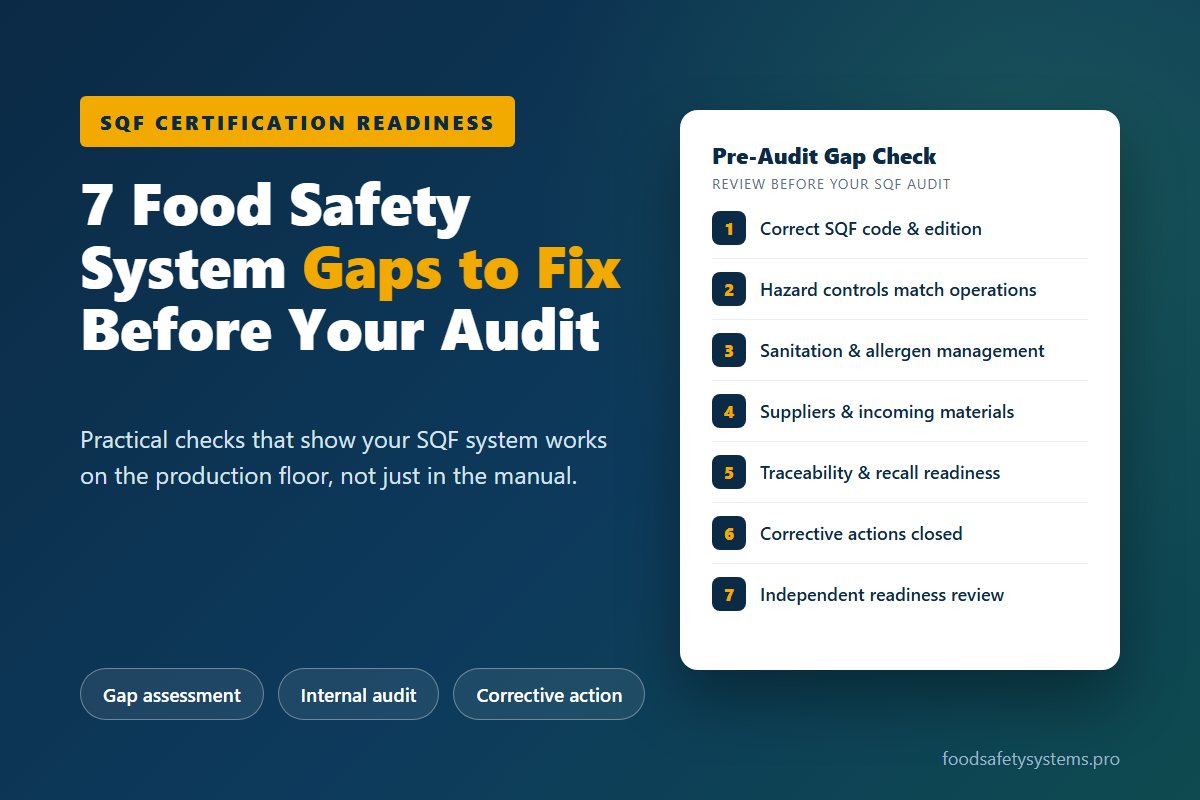
SQF certification readiness depends on more than a complete food safety manual. An approaching SQF audit can expose differences between what the manual says and what happens on the production floor. Strong readiness begins with the right code, implemented processes and evidence that controls are operating as intended. A useful assessment examines not just whether a procedure exists, but whether employees understand it, records support it and deviations lead to effective action.
What FDA Warning Letters can teach SQF facilities
FDA Warning Letters are a useful reminder that written programs alone do not establish effective food safety controls. FDA regulatory obligations and SQF certification requirements are different, and an SQF certification audit is not an FDA inspection. Even so, recurring enforcement themes, such as inadequate preventive controls, sanitation, allergen management and corrective action records, can prompt an SQF facility to evaluate its own readiness. This article does not discuss any individual enforcement case.
Consultare Inc. Group uses this risk-based perspective to assess operational practices against applicable SQF requirements, prioritize gaps, support corrective action implementation and review objective evidence before an audit.
1. Confirm the correct SQF code and audit edition
Start with the food sector category, products and operations included in the intended certification scope. The SQF Food Safety Codes are sector-specific, so requirements should be applied to the actual activity, not a generic checklist.
SQF Edition 10 was published in March 2026. According to SQFI’s code edition guidance, audits scheduled before the Edition 10 start date remain on Edition 9; Edition 10 audits are expected to begin on January 2, 2027, contingent on the GFSI benchmarking process. Confirm the latest SQFI transition notice and your certification body’s instructions before your audit.
2. Verify that hazard controls match operations
Review flow diagrams, process steps, ingredient changes and hazard analysis. When an operation changes, ask whether controls, monitoring and validation or verification evidence still support the decisions made. Walk the line with operations, maintenance and quality personnel rather than relying only on a conference-room review.
3. Check sanitation and allergen management
Evaluate cleaning methods, chemical controls, sanitation schedules, pre-operational inspections and the evidence used to judge effectiveness. Where allergens are present, review segregation, changeovers, labeling and cleaning verification in relation to actual cross-contact risks. Our guides to SQF sanitation requirements and allergen control measures go deeper on both.
4. Reassess suppliers and incoming materials
Your approved supplier program should align with the materials actually purchased. Check specifications, food safety information, applicable certificates and incoming inspection records. Escalate significant supplier changes and ingredient substitutions for risk review.
5. Test traceability and response readiness
Run a realistic traceability exercise across receiving, production and finished-product distribution. Evaluate the accuracy and speed of records retrieval and whether the site can identify potentially affected lots. Use the results to improve your recall and withdrawal procedure and your annual mock recalls.
6. Close corrective actions effectively
A completed correction is not necessarily proof that the underlying cause is controlled. For repeat findings, examine the root cause, accountable owner, target date and verification of effectiveness. Keep evidence that shows what changed. See our CAPA process guide for more.
7. Conduct an independent SQF certification readiness review
Perform a gap assessment and internal audit against the appropriate SQF code and your own procedures. Record findings, assign responsibilities and prioritize high-risk deficiencies ahead of the certification audit.
How Consultare Inc. Group helps resolve these compliance gaps
A compliance finding is not resolved simply by promising to revise a procedure. Consultare Inc. Group can help translate the issue into a practical, evidence-based improvement plan, with the exact scope agreed for your facility.
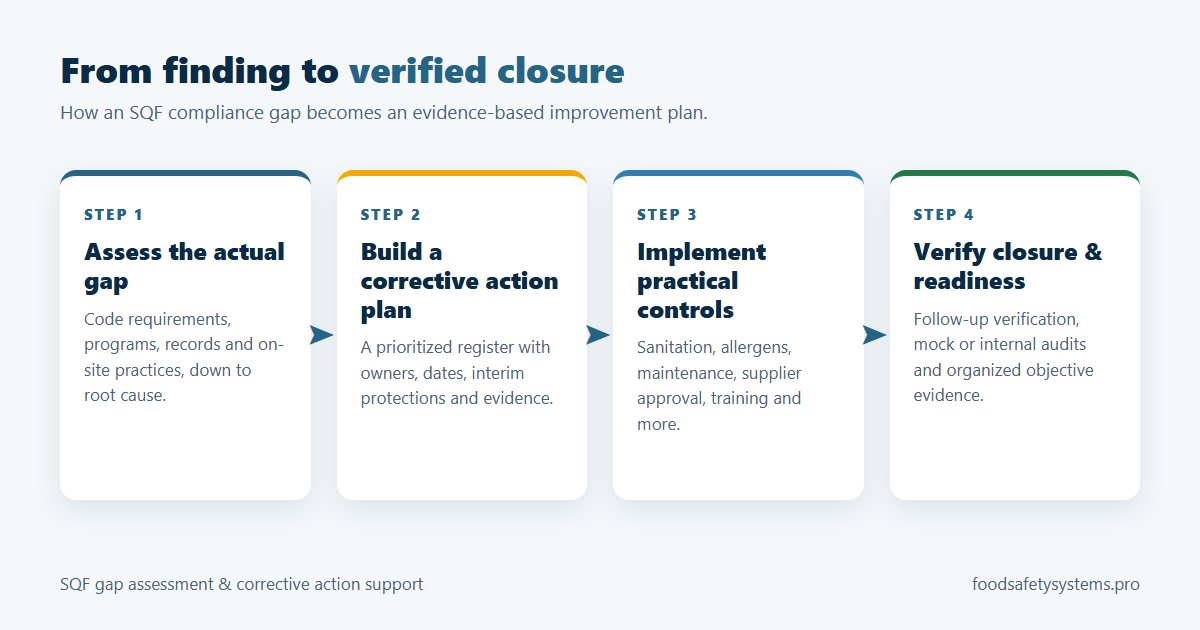
Step 1: Assess the actual gap
Review the relevant SQF Code requirements, facility programs, records and on-site practices to determine the extent and root causes of nonconformities.
Step 2: Build a corrective action plan
Translate findings into a prioritized action register with responsible owners, completion dates, interim protections and supporting evidence.
Step 3: Implement practical controls
Support updates to sanitation, allergen management, preventive maintenance, supplier approval, training and other applicable food safety system elements.
Step 4: Verify closure and readiness
Review completed actions, conduct follow-up verification and mock or internal audit activities, and organize objective evidence for the certification process.
Examples of project deliverables
- SQF gap assessment with prioritized findings
- Corrective action register and document revision recommendations
- Internal audit or mock audit evidence and closure verification
Consultare’s role: provide technical assessment, recommended controls, implementation support and closure verification where included in the engagement. The regulated business remains responsible for its compliance obligations; consulting support does not guarantee FDA acceptance, a particular inspection outcome or certification.
Related Consultare Inc. Group services
Depending on the engagement, related services include:
- SQF gap assessments and certification readiness reviews
- SQF food safety system development and documentation
- Internal audits, mock audits and corrective action support
- HACCP, sanitation and allergen program review
- Ongoing food safety and quality assurance (FSQA) support
Request an SQF readiness consultation
Discuss the appropriate scope of support for your products, processes and regulatory obligations. Book a time that suits you, or contact our team.
Book an SQF Readiness Consultation
Regulatory and technical note: requirements differ by operation, product, standard edition and applicable exemptions. Verify current requirements and service scope before use. Primary references: SQFI – Which code edition should I use? and SQFI – Food Safety Program and Codes.