
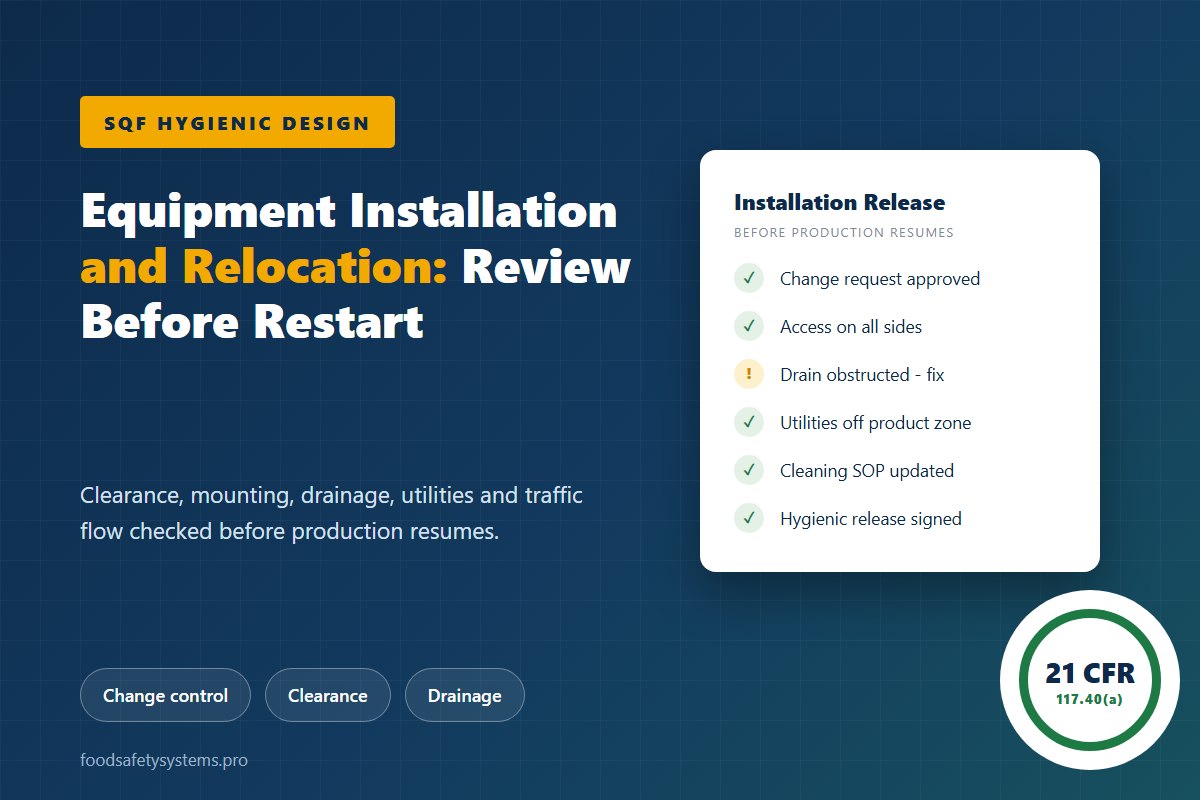
Equipment installation and relocation can change food safety conditions even when the machine itself is unchanged. A relocated filler may create new cleaning blind spots, block a floor drain or redirect personnel traffic through a clean area. For this reason, installation decisions should consider hygienic access before production resumes, not after the first sanitation failure.
Quick answer: before releasing new or moved equipment, review clearance, cleaning and inspection access, floor mounting, utilities, drainage, product and employee movement, and release conditions. Keep evidence of that review and its approval. SQF certification and U.S. FDA current good manufacturing practice (cGMP) requirements are separate, so consider both where they apply.
Who this guidance is for
This guide supports SQF practitioners, plant engineers, project managers and sanitation leads. It also helps operations managers who plan line changes, capacity expansions or equipment purchases in SQF-certified facilities.
Why equipment installation and relocation create hidden risk
Project teams usually focus on throughput, utilities and start-up dates. Those goals matter. However, a machine pushed against a wall or mounted over a drain can be impossible to clean properly once it is running.
Common results include residue build-up behind frames, standing water under bases and new harbourage points for pests or Listeria. In addition, operators may start using shortcuts through clean areas because the new layout makes the old route longer.
FDA cGMP rules give useful context here. Equipment must be installed so as to facilitate the cleaning and maintenance of the equipment and of adjacent spaces (21 CFR 117.40). Plants must also provide adequate space for equipment placement and unobstructed working aisles between equipment and walls (21 CFR 117.20).
What a good installation review looks like
A strong process treats equipment installation and relocation as a controlled change. In practice, it has these features:
- A change request is raised before equipment is bought, moved or modified.
- Food safety, sanitation, maintenance and operations review the plan together.
- The review uses a written hygienic design checklist rather than memory.
- Conditions for release are defined before the work starts.
- The finished installation is inspected, cleaned and signed off before production.
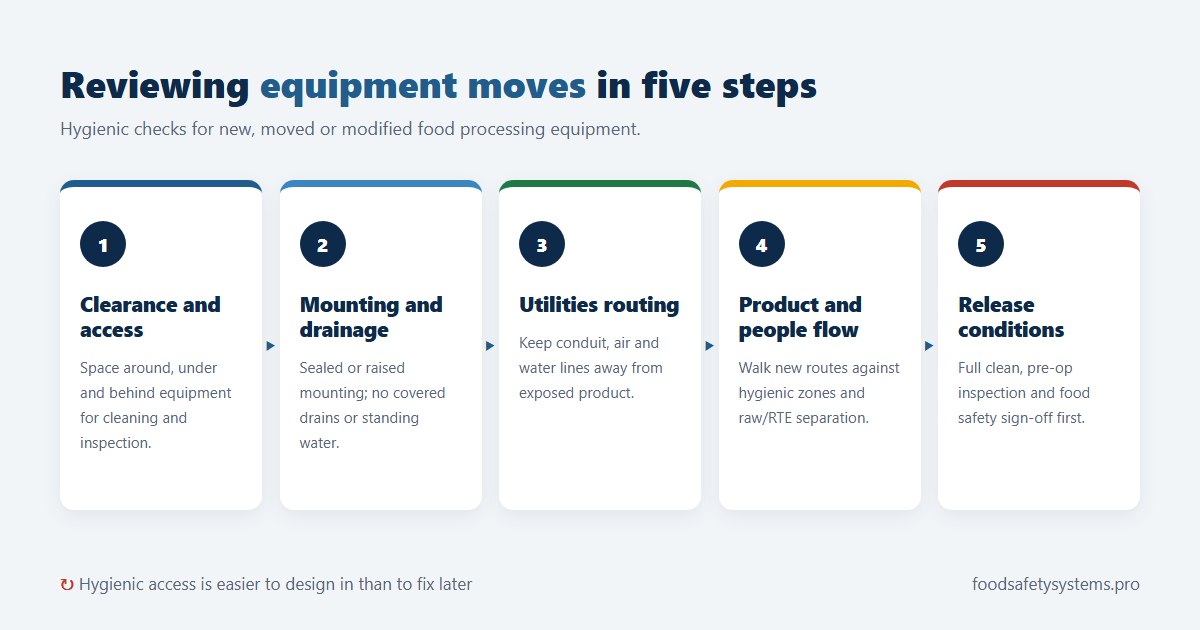
Five review points before production resumes
Five review points cover most changes. Use them for every installation, relocation or major modification.
1. Check clearance and access
Confirm there is enough space around, under and behind the equipment for cleaning, inspection and maintenance. If staff cannot see or reach a surface, they cannot verify it is clean.
2. Review floor mounting and drainage
Check how legs and frames meet the floor. Sealed or raised mounting reduces gaps where residue collects. Next, confirm the equipment does not cover or obstruct drains and that wash water flows away from it.
3. Route utilities hygienically
Electrical conduit, air lines, water and steam connections can create ledges and drip points. Route them to avoid passing over exposed product, and leave space for cleaning around them.
4. Map product and employee movement
Walk the new flow. Check whether raw and finished product paths stay separated, and whether staff can still follow hygienic zoning rules without crossing high-risk areas. Our hygienic zoning article explains how traffic controls support this step.
5. Define and verify release conditions
Before start-up, require a full clean, a pre-operational inspection, removal of tools and debris, and sign-off by food safety. Add verification such as swabbing where the site’s program uses it. Then keep the evidence with the change record.
Common problems after installation or relocation
- Equipment placed too close to walls or other machines to clean behind it.
- Frames or legs bolted flat to the floor with unsealed gaps.
- Drains covered, relocated or left with poor fall toward them.
- New cable trays or pipe runs installed above open product.
- Employee routes that now cross from raw to ready-to-eat zones.
- Production restarted without a documented hygienic release.
Records and evidence to keep
Auditors look for proof that the change was reviewed and released in a controlled way. Keep these records together:
- The change request, risk assessment and hygienic design checklist.
- Layout drawings or photos showing clearances, drains and traffic routes.
- Approval signatures from food safety, sanitation, maintenance and operations.
- Updated cleaning procedures, sanitation schedules and training records.
- Pre-start inspection results and the signed production release.
- Post-installation corrective actions with owners, deadlines and closure evidence.
Remember to update the food safety plan and process flow if the change affects hazards or controls. Our SQF sanitation requirements guide covers how sanitation evidence is reviewed in audits.
Example scenario: moving a slicer
In this illustrative example, a deli meat processor moves a slicer to make room for a new packaging machine. The slicer works perfectly in its new spot. However, its rear panel now sits 15 cm from a wall, and a floor drain is half covered by the base.
Within weeks, sanitation crews report pooled water and residue behind the unit. The team raises a corrective action and repeats the installation review. As a result, they move the slicer forward to allow full access, relocate the drain cover and update the cleaning procedure.
They also add the hygienic design checklist to the site’s change control procedure. Future moves are now reviewed before the work starts rather than after problems appear.
Equipment installation and relocation checklist
- Raise a change request before buying, moving or modifying equipment.
- Confirm cleaning and inspection access on all sides.
- Check floor mounting, sealing and drainage.
- Route utilities away from exposed product.
- Walk product and employee movement against hygienic zones.
- Update cleaning procedures, schedules and training.
- Release production only after a documented clean and inspection.
- Track and close any post-installation corrective actions.
Frequently asked questions
Does moving existing equipment need a hygienic review?
Yes. Relocation can change clearances, drainage, utilities and traffic flow, even when the machine is unchanged. Treat it as a controlled change.
Who should approve equipment installation and relocation?
Food safety, sanitation, maintenance and operations should all review the change. Facility management then approves and owns the implementation.
Are EHEDG or 3-A guidelines mandatory?
No. Organizations such as EHEDG and 3-A Sanitary Standards publish voluntary hygienic design guidance. Separate applicable requirements from voluntary guidance when you make decisions.
How Consultare Inc. Group can help
Consultare Inc. Group can help SQF teams develop change-review checklists, track readiness gaps and organize post-installation corrective actions. Exact deliverables depend on the approved scope. Facility management retains responsibility for approving and implementing changes, and we do not promise certification, regulatory approval or a particular audit outcome.
- SQF gap assessments and internal audits: hygienic review of planned layout changes.
- Document control services: change control procedures and checklists.
- Corrective action support: closure of post-installation findings.
- Audit readiness coaching: evidence for changes made before an audit.
Need help managing your SQF responsibilities?
Discuss your products, documentation and compliance priorities with the Consultare team in a free consultation, or contact our team.
Start building your compliance system
Prefer to organize your compliance activities yourself? Create a free SystemsBuilder account to manage specifications, controlled documents, assigned actions and records in one structured workflow. Software supports record management; it does not by itself ensure compliance.
Technical sources: 21 CFR 117.40, 21 CFR 117.20 and SQFI. Independent educational content: Consultare Inc. Group is not affiliated with or endorsed by SQFI, FDA, EHEDG or 3-A. This article is not legal advice, regulatory approval, certification or a guarantee of compliance; requirements depend on the facility, food, jurisdiction and applicable program, so confirm current requirements and obtain qualified technical review before implementation.