
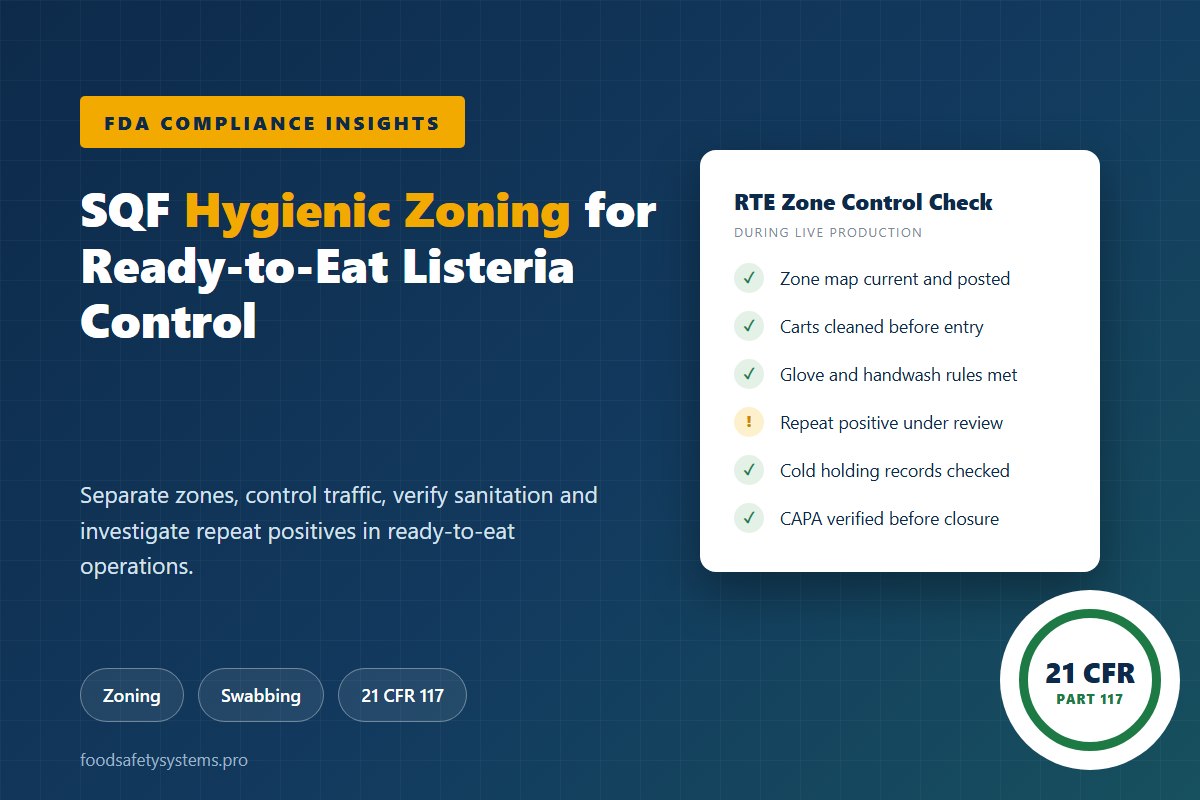
Hygienic zoning is where Listeria control in ready-to-eat (RTE) operations either holds or breaks down, because products, people, carts and packaging constantly move between areas. When exposed food is handled after a lethality step, sanitation and environmental pathogen controls must work in practice, not just on paper. Temperature monitoring, documented deviations and verified corrective actions are also central to preventing unsafe distribution.
Quick answer: SQF sites can reduce environmental Listeria risk by identifying contamination routes, separating hygienic zones, verifying sanitation and investigating recurring positive results. Map each requirement to the applicable SQF Code and to the site’s actual food safety risks.
Who this article is for
SQF-certified or certification-seeking ready-to-eat food manufacturers, commissaries and catering facilities.
Map hygienic zoning and traffic routes
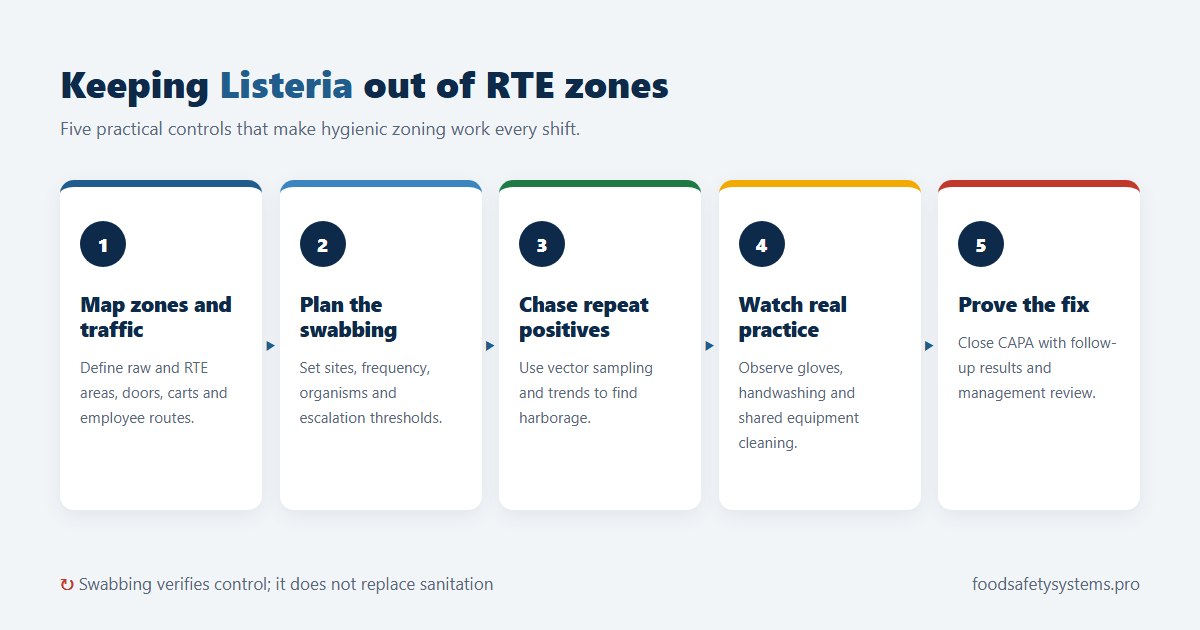
Assess raw and RTE handling areas, doors, shared carts, racks, utensils and employee movement. Then define where equipment must be cleaned, sanitized or restricted before it enters a higher-hygiene area. Mobile items such as carts and pallet jacks often cross zones unnoticed, so give them explicit rules.
Design risk-based environmental monitoring
Document the sampling map, target organisms or indicators, sample locations, timing, frequency, collection methods, laboratory arrangements and escalation thresholds. High-traffic and mobile equipment locations deserve explicit consideration. Where contamination of an RTE food with an environmental pathogen is a hazard requiring a preventive control, 21 CFR 117.165 expects scientifically valid environmental monitoring procedures. Our Listeria environmental monitoring and sanitation guide covers program design in more depth.
Investigate repeat positives, not just individual swabs
Recurring findings may indicate persistent harborage or movement between zones. Therefore, use vector sampling, equipment inspection, trend review and investigations proportionate to the findings. A single negative retest does not close a pattern. See our environmental monitoring program article for trending methods.
Verify sanitation and employee practices
Observe glove changes, handwashing, cleaning of shared equipment and the handling of dirty dishware. Confirm that staff follow written rules during actual production, not only during a scheduled walk-through. Under 21 CFR 117.135, sanitation controls address environmental pathogens and hazards from employee handling, where they apply.
Check refrigerated holding and release records
Use scientifically justified temperature criteria and reliable measuring devices. When excursions or monitoring gaps occur, evaluate the affected food. A later acceptable reading is not automatic clearance. Our guide to SQF cooling controls shows the same principle applied to refrigerated rice products.
Close corrective actions with effectiveness evidence
Record the cause, affected-area assessment, corrective steps, assigned owners and follow-up observations or test results. Include recurring observations in management review so leadership sees the trend.
Practical readiness checklist
- Map exposed-food processing and potential contamination routes.
- Check whether control procedures are followed during live production.
- Document risk-based monitoring methods, frequencies and records.
- Define investigation and product-assessment steps for deviations.
- Verify corrective-action effectiveness before closure.
Frequently asked questions
Is an environmental swab program enough to control Listeria?
No. Sampling is verification information. Effective control also depends on hygienic practices, sanitation, equipment condition, zoning and a documented response to findings.
Must every SQF site use the same Listeria sampling frequency?
No. The sampling design should reflect product exposure, facility layout, hazard analysis, applicable code requirements and risk.
What should a repeat environmental positive trigger?
A documented investigation into sources, routes and possible harborage, an assessment of food risk, and proportionate corrective actions with effectiveness verification.
How Consultare Inc. Group can help
Consultare Inc. Group offers practical, structured food safety and compliance support. Services and deliverables depend on the agreed engagement scope and the requirements that apply to each facility.
- SQF gap assessments and internal audits: hygienic zoning and traffic review.
- Hygiene and sanitation programs: sanitation and environmental monitoring evaluation.
- SQF audit readiness coaching: internal audit preparation for RTE sites.
- Corrective action support: root cause analysis and CAPA verification.
Need help managing your SQF responsibilities?
Discuss your products, documentation and compliance priorities with the Consultare team in a free consultation, or contact our team.
Start building your compliance system
Prefer to organize your compliance activities yourself? Create a free SystemsBuilder account to manage specifications, controlled documents, assigned actions and records in one structured workflow. Software supports record management; it does not by itself ensure compliance.
Technical sources: 21 CFR 117.135, 21 CFR 117.165 and SQFI. Independent educational content: Consultare Inc. Group is not affiliated with or endorsed by FDA, SQFI or any companies referenced in the underlying regulatory materials. This article does not constitute regulatory approval, certification or legal advice; applicability must be assessed for each product, facility and operation.