
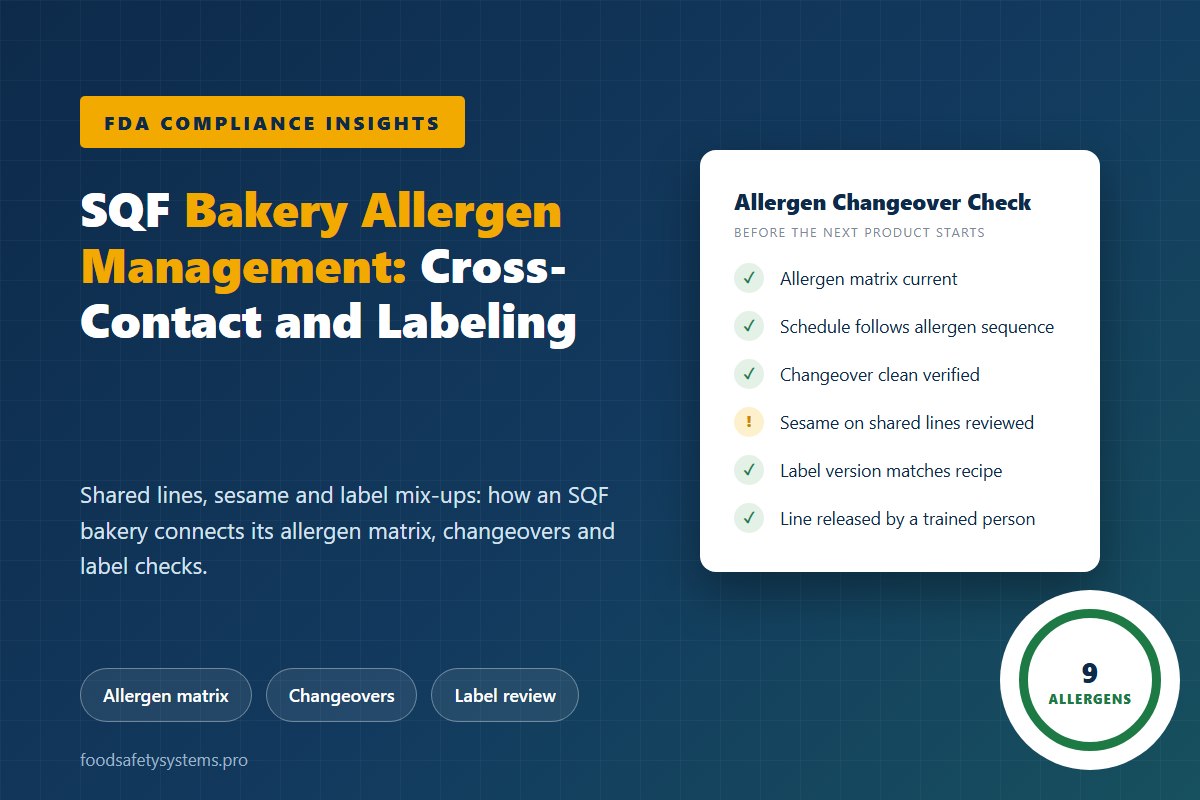
Bakery allergen management is one of the hardest parts of an SQF system to get right, because most bakeries run products with different allergen profiles on the same mixers, tables, conveyors and ovens. Sesame is a good example: since January 1, 2023 it has been the ninth major food allergen in the U.S., and bakeries that make sesame-topped and sesame-free products on shared lines face real cross-contact and labeling risk. A well-functioning SQF food safety system turns those risks into procedures staff can follow and records managers can verify.
Quick answer: an SQF-aligned bakery allergen program connects ingredient specifications, equipment changeovers, cleaning verification, label approval, employee practices and corrective actions. FDA preventive controls obligations under 21 CFR Part 117 must be evaluated separately from SQF certification criteria.
Who should read this
SQF-certified and certification-seeking bakery manufacturers, food safety and quality managers, production planners and the people who approve labels and packaging.
Map ingredients and shared-line exposure
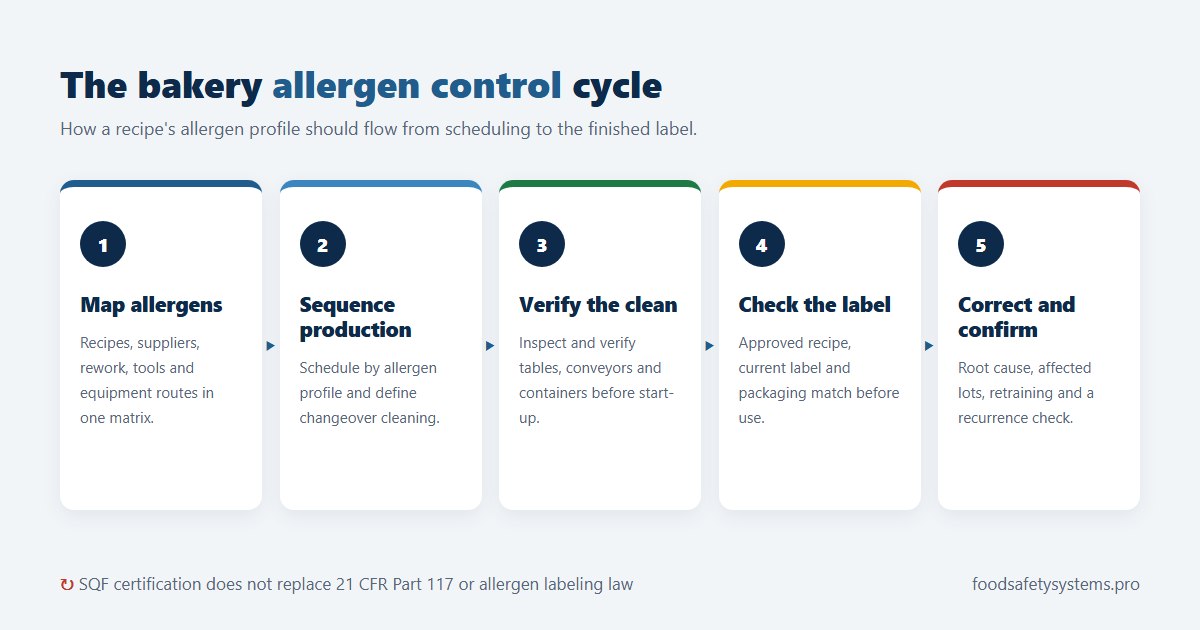
Keep a current allergen matrix for every recipe, supplier, ingredient, rework stream, utensil, storage area and equipment route, and compare allergen profiles before production is scheduled. Supplier changes are a common blind spot: a substitute flour or topping can bring a new allergen into a product that was allergen-free. Our SQF allergen identification and documentation page explains how to keep the matrix audit-ready.
Control product sequencing and line changeovers
Set written criteria for scheduling and cleaning between products with different allergen profiles, and verify that tools, conveyors, tables and reusable containers are suitable before start-up. Dry bakery environments make this harder: flour dust, seeds and crumbs travel, so changeover cleaning and verification should be specific to each line. See SQF allergen control measures for the controls the Code expects.
Confirm finished-product label accuracy
Connect approved recipes to current labels and packaging, and include a documented check that major allergens, the ingredient statement, product identity and nutrition information match the product actually being packed. Undeclared allergens are consistently one of the leading causes of FDA food recalls, and most trace back to the wrong label or packaging on the line. Control label versions with the same rigor as recipes.
Evaluate post-bake environmental exposure
Assess how exposed ready-to-eat product is handled after baking, including hygienic zoning, sanitation verification and environmental monitoring where your hazard analysis justifies it. Cooling, slicing, icing and packing areas are where baked product is most exposed.
Address physical hazards and maintenance
Inspect fraying belts, worn brushes and other food-contact equipment, evaluate physical hazard controls such as metal detection or sieving, and keep maintenance and pre-operational inspection records. Damaged equipment is also harder to clean of allergen residue.
Close corrective actions using evidence
When an allergen or labeling failure happens, evaluate affected lots, determine the root cause, document retraining or procedure changes, and verify that the failure does not recur. Then confirm effectiveness through allergen control verification.
Bakery allergen management checklist
- Is the allergen matrix updated with every recipe and supplier change?
- Do production schedules and changeover logs follow the documented allergen sequence?
- Are packaging and label versions verified against the approved recipe before each run?
- Are training, inspections and CAPA documented and reviewed?
Frequently asked questions
Does SQF certification replace FDA preventive controls?
No. SQF certification is not a substitute for applicable FDA requirements under 21 CFR Part 117, including allergen preventive controls where they apply.
Should every bakery conduct environmental monitoring?
It depends on the hazard analysis, how exposed the product is after baking, applicable requirements and the role of sanitation controls.
What records help demonstrate allergen control?
An allergen matrix, changeover logs, cleaning verification, label approval records, training documentation and corrective action evidence.
For sanitation, pest prevention and equipment condition in baking operations, read our companion guide to SQF baked goods sanitation.
How Consultare Inc. Group can help
Consultare Inc. Group supports bakeries with practical, professional food safety and regulatory compliance guidance. Engagement scope, regulatory applicability and deliverables are confirmed for each client.
- SQF readiness reviews and internal audits: allergen program assessments on the floor.
- Document control services: label-control workflows and controlled recipes.
- FDA compliance integration: align SQF allergen controls with Part 117.
- Corrective action support: root cause and effectiveness checks after allergen incidents.
Need help managing your SQF responsibilities?
Discuss your products, documentation and compliance priorities with the Consultare team in a free consultation, or contact our team.
Start building your compliance system
Prefer to organize your compliance activities yourself? Create a free SystemsBuilder account to manage specifications, controlled documents, assigned actions and records in one structured workflow. Software supports record management; it does not by itself ensure compliance.
Technical sources: 21 CFR Part 117 and SQFI. Independent educational content: Consultare Inc. Group is not affiliated with or endorsed by FDA. This article does not constitute regulatory approval, certification or legal advice; applicability must be assessed for each product, facility and operation.